

Short answer: Mold remediation history rarely hurts a home sale. Remediation nobody can document is what costs sellers money. A buyer’s inspector who sees white encapsulation coating on basement joists will write it up, and the seller who can produce a dated scope of work plus a clearance report keeps control of the conversation.
Mold remediation history rarely hurts a home sale on its own. The calls I get are almost always the same shape: the work was done years ago, the file is long gone, and a buyer’s inspector just wrote up something he saw on the basement ceiling. I have gone back more than ten years into our records to pull a scope of work for a seller in that spot. Often that is the entire fix.
Most of the time the inspector has not found mold at all. He has found evidence that mold was there once, and the homeowner has nothing to hand him that explains it. The buyer fills that gap with a guess. The guess is always bigger than the job was.
If you are getting a house ready to list and there is remediation somewhere in its past, call Dry Ease Mold Removal at 877-215-8399 before the sign goes up. A free estimate costs you nothing, and neither does asking us whether your old file is still on our shelf.
What a Buyer’s Inspector Actually Sees in a Remediated Basement
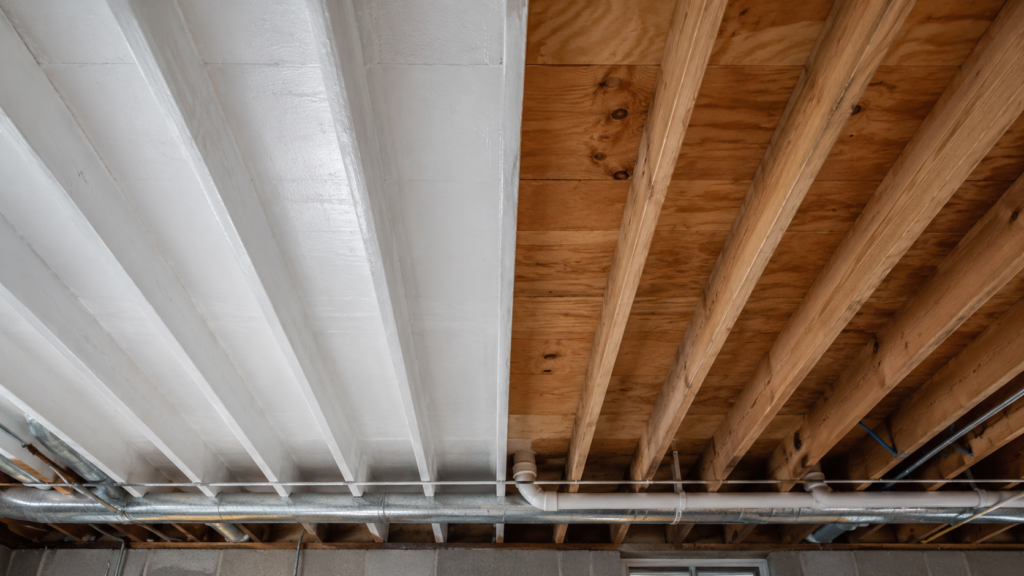
Past remediation shows up on exposed building material, which in a house almost always means an unfinished basement. Finished rooms hide everything behind drywall and paint. A basement with open joists and bare subfloor decking overhead shows an inspector exactly what was done to the wood, years after the fact.
Two things stand out from below. One is wire brushing, where the surface of the wood has been mechanically cleaned and reads lighter or scored against the framing around it. The other is encapsulation, a white coating over the treated surface. When structural members are painted white in a basement where nothing else is finished, that is encapsulation, and any inspector who has been at this a few years knows it on sight. Attics behave the same way wherever roof sheathing is open.
Neither tell means there is a problem today. Both mean something happened, and it goes in the report. What he cannot see from the floor is how large the original area was, whether the leak got fixed, or who did the work. Those answers live in paperwork, which is why a mold inspection at listing time often helps a seller less than a search through the filing cabinet.
| What the inspector sees | What it usually means | What it does not tell him |
|---|---|---|
| Opaque white coating on joists or subfloor decking | Encapsulation applied after a remediation | Whether the moisture source was ever repaired |
| Bare wood that looks scored or lighter in patches | Wire brushing, the mechanical cleaning step | How large the affected area originally was |
| Coating that ends at a clean line partway across the ceiling | Work limited to one defined section | Nothing further, and that stopping line is a good sign |
| Coating carried wall to wall across the whole ceiling | A very large job, or a cosmetic decision | Which of the two, which is why it draws questions |
Why Mold Remediation History Only Becomes a Problem Without Paperwork
The sellers who call me have usually lost their documentation. The work got done, the testing got done, then a decade of moving and cleaning out closets happened. Now there is visible evidence on the joists and a buyer asking for proof the job was finished.
Sellers usually expect one company to hold all of it. When we handle a remediation, we are not the ones doing the retesting. New York keeps mold assessment and mold remediation in separate hands, so clearance results sit in the assessor’s file rather than ours. That split shapes the whole job, and I went through it in how long mold remediation takes.
What I can produce is the scope of work: what was done, where, and the date it was completed. That document answers an inspector’s write-up directly. You want the clearance report next to it. Together the two describe a job that started and finished. Either one alone leaves half the question open.
| Document | Who issues it | What it proves to a buyer |
|---|---|---|
| Scope and description of work completed, with the date | The licensed mold remediation contractor | What was removed or treated, where, and when |
| Post-remediation clearance report | The independent mold assessor, not the remediation contractor | That the area was tested after the work and passed |
| Plumbing, roofing or masonry invoice for the source | Whoever repaired the leak | That the cause was fixed, not only the growth |
| Property Condition Disclosure Statement | The seller | What the seller knew at the time of signing |
The Request I Talk Sellers Out Of
A client called me recently about his basement. Water had been getting in around the chimney, we handled the affected area, and then he asked whether we could encapsulate the entire basement ceiling so the whole thing would look uniform. I told him not to do it.
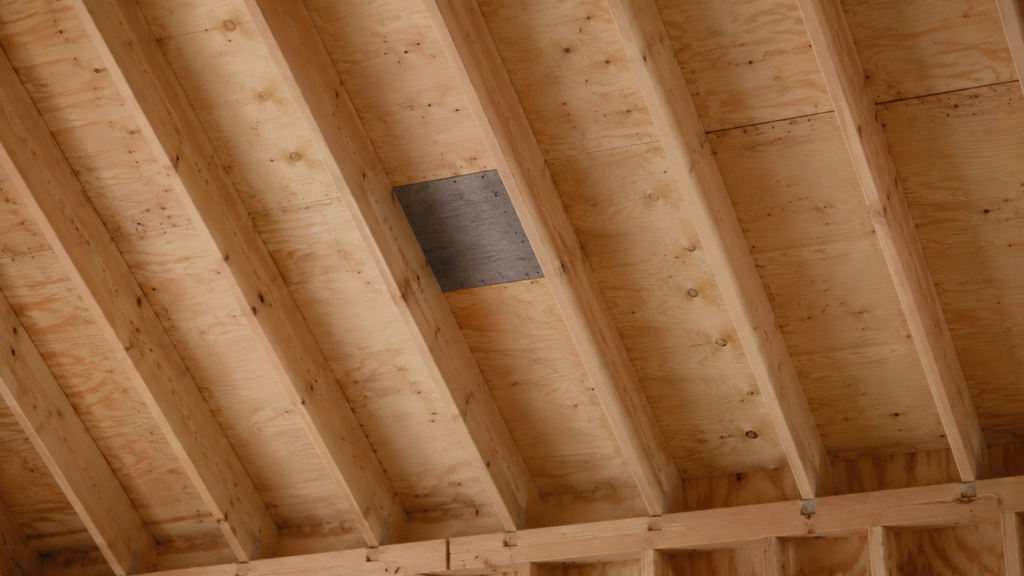
The same request comes up in attics. A small section of roof sheathing gets remediated, the rest stays untouched, and the homeowner wants the whole underside of the roof coated white because a partial job looks unfinished. I understand the instinct. It is also the fastest way I know to make a small job look like a flood.
A buyer standing under a fully coated ceiling has no way to tell whether that white covers one bad section or an entire structure that went wrong. He assumes the larger version, because that is the cautious read. Now the seller is answering questions about a water event that never happened, and his paperwork describes a much smaller job than the coating implies. EPA guidance for residential mold, as of August 2026, is to clean up the mold and dry the surface before painting. Coating is a finishing step, so spreading it past the treated area adds nothing.
Encapsulation is a map of where the work happened. Paint the whole ceiling and you have drawn a bigger problem than the one you had.
Leave the coating where the job was. If the line where it stops bothers you visually, remember that it matches your paperwork, and matching paperwork is the whole game here.
What Mold Remediation History Looks Like on the New York Disclosure Form
New York requires sellers of one to four family homes to complete a Property Condition Disclosure Statement and deliver it to the buyer before a binding contract gets signed. As of August 2026 that is mandatory. The old workaround of handing the buyer a $500 credit instead of the form was eliminated on March 20, 2024, under Real Property Law section 462.
Two questions land on this topic. Question 27 asks whether the property has been tested for indoor mold, and if the answer is yes, it directs you to attach a copy of the report. Question 28 asks whether there is any rot or water damage to the structure, written in the present tense. Answers come from your actual knowledge, and the statute does not require you to investigate first. A knowingly false or incomplete answer can expose a seller to claims, so how yours gets filled out is a conversation for your attorney.
One definition matters in this city: the act covers a one to four family dwelling and excludes condominium units and cooperative apartments. Plenty of New York sellers never see the form.
Question 27 asks you to attach a report. Having one to attach turns a checkbox into a closed subject. Remediation history helps a seller as long as nobody makes it into something larger than it was.
| Point in the sale | Seller holding the documents | Seller holding nothing |
|---|---|---|
| Inspector writes up coated joists | Answers with a dated scope of work and a clearance report | Answers from memory, years after the fact |
| Disclosure question 27, tested for indoor mold | Attaches the report the form asks for | Checks unknown, or checks yes with nothing to attach |
| Buyer asks how big the affected area was | The scope names the rooms and the materials | The buyer estimates from how far the white coating runs |
| Buyer asks whether the leak was repaired | The plumbing or roofing invoice sits in the same folder | Nothing on paper either way |
| Price conversation | Stays narrow, about a defined and closed area | Opens up, about the whole basement |
If We Did the Work and You Lost the File
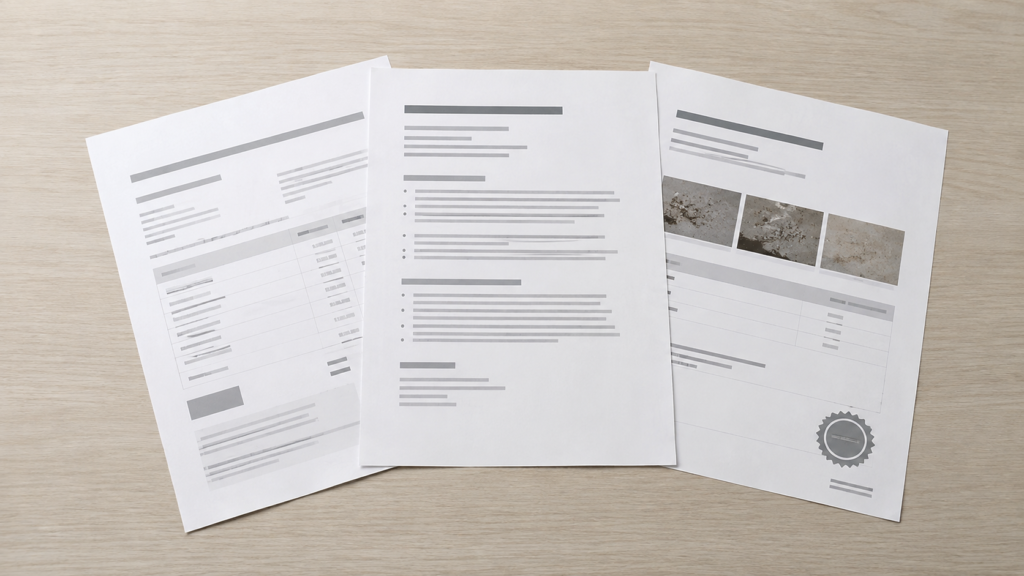
Call with the property address and roughly the year, and we will look. I have gone back more than ten years pulling records for sellers. What comes back is a description of the work completed and the date it was completed, which is usually the exact thing a buyer’s attorney asked for.
For the clearance side, go back to whoever did the post-remediation testing. If you cannot remember who that was, the remediation paperwork often points at them, since the scope was written against the assessor’s plan.
If the search turns up nothing because the work was never documented properly, that is worth knowing before attorney review rather than during it. A seller who finds out early still has choices. The same logic runs through getting a fair price for mold remediation: whoever holds the written scope controls the conversation.
One more thing before you list. If nobody ever confirmed the original leak was repaired, a buyer’s inspector may find fresh moisture sitting on top of the old evidence. Leak detection answers that before a stranger with a moisture meter does.
FAQ
Does mold remediation history have to be disclosed when selling in New York?
The state disclosure form asks what you know. Question 27 asks whether the property has been tested for indoor mold and tells you to attach the report if it has. Question 28 asks about current rot or water damage. Answer from actual knowledge and ask your attorney how yours applies.
Can Dry Ease reissue paperwork for a job you did years ago?
Usually, yes. We hold job records a long time, and I have gone back more than ten years to pull a scope of work for a seller. Call with the property address and roughly the year. Clearance test results come from the assessor who did the testing, not from us.
Should I have the area retested before I list the house?
Only if you have reason to think something is wrong now, or a buyer asks for it. Retesting a dry area that already has clearance on file mostly produces a second report saying what the first one said. If a leak is open somewhere, spend the money there instead.
Will encapsulation on my basement joists fail a home inspection?
A home inspector does not pass or fail a house. He records what he sees, and white coating on exposed joists gets recorded as evidence of past remediation. What happens next depends entirely on whether you can explain it with a dated document.
The buyer’s inspector wrote up my basement. What do I send him?
Send three things at once: the scope of work with its completion date, the clearance report from the assessor, and whatever invoice covers the repair that stopped the water. Sending them one at a time reads like you are producing documents only when pushed.
Is a small area I cleaned myself worth mentioning?
A cleaned surface spot with the moisture fixed usually leaves nothing structural behind. Trouble starts when the surface gets wiped and the source keeps running. More on that line in removing mold yourself.
Who You’re Getting This From
Dry Ease Mold Removal is a New York State licensed Mold Remediation Contractor (License 26-6AXK6-SHMO), serving New York City since 2003 with more than 10,000 completed jobs. A steady share of my calls have nothing to do with active mold. They are sellers standing under a coated joist, needing to know what happened up there and who can put it in writing. We keep remediation records long enough that a homeowner from a decade ago can still get a scope of work.
Send me a photo of whatever the inspector flagged and I will tell you whether it is worth a visit, or call 877-215-8399 for a free estimate. Dry Ease works across Manhattan, Brooklyn, Queens, the Bronx and Staten Island, plus Westchester County, Nassau County, Rockland County and New Jersey.