
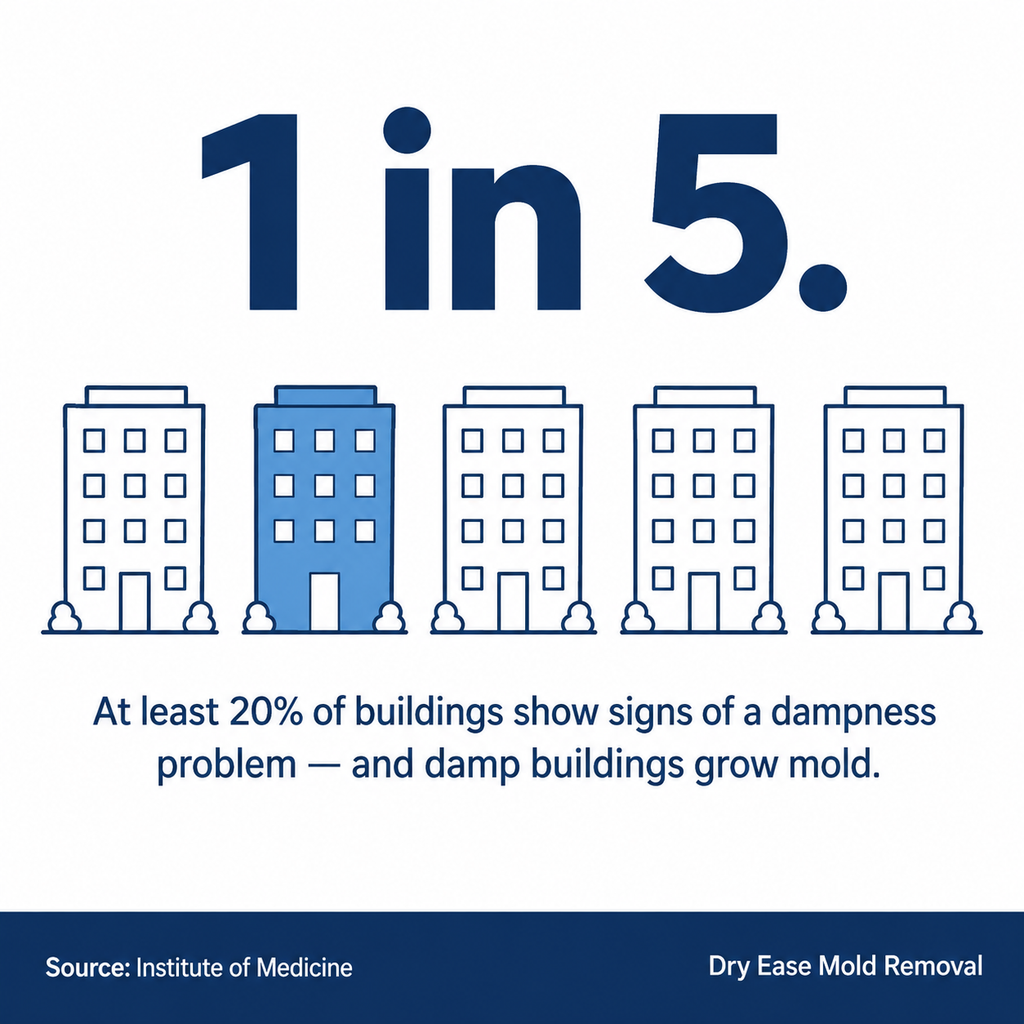
The most common signs of mold in an apartment are a musty smell that never fully goes away, visible spots on walls or ceilings, water stains or peeling paint, condensation that keeps coming back, and allergy symptoms that improve when you leave home. At Dry Ease Mold Removal, we have spent over 20 years remediating mold in New York apartments and have helped more than 50,000 families across the metro area. Mold problems are more common than most people think. Research on indoor dampness found that at least 20 percent of buildings show signs of a dampness problem, and damp buildings grow mold.
Here is what to look for, and what to do about it.
1. A Musty Smell That Doesn’t Go Away
The musty smell is the single most reliable sign, and it is usually the first one people notice. Mold releases gases as it grows, and those gases are what you smell. The EPA describes the odor as musty or moldy, like damp earth or old paper.
Here is the important part: that smell means mold is actively growing somewhere, even if you cannot see anything. Mold often grows behind walls, under floors, or inside cabinets, so the smell frequently shows up before any visible sign does.
If a musty smell keeps returning after you clean and air out the apartment, take it seriously. Pay attention to where it is strongest. A smell that concentrates in one closet, one corner, or the bathroom is pointing you toward the source.
2. Spots or Discoloration You Can See
Mold on a wall or ceiling usually shows up as clusters of small spots that spread over time. It can be black, green, brown, gray, or white, and it often looks fuzzy or slimy rather than flat.
Not every mark on a wall is mold, though. The three things people mix up most are mold, mildew, and plain water stains. Here is how to tell them apart:
| Mildew | Mold | Water stain | |
|---|---|---|---|
| What it looks like | Flat gray or white patches, often powdery | Spots or blotches in black, green, brown, or white, often fuzzy or slimy | A flat brown or yellow mark, often with a ring around it |
| Where it shows up | Surfaces like shower walls, grout, and windowsills | Can grow into porous materials like drywall, plaster, and wood | Wherever water ran or pooled, often ceilings and upper walls |
| Does it wipe away? | Yes, it cleans off easily | The surface may wipe clean, but growth inside the material remains and comes back | It does not wipe away, but it also does not spread or smell |
| What it means | A surface moisture problem you can usually handle yourself | Active growth that needs the moisture source fixed | Water got in at some point, so check the area for mold |
The short version: mildew stays on the surface, while mold penetrates the material it grows on. That is why mildew wipes off a shower wall in one pass, and why a moldy patch of drywall keeps coming back after you clean it.
A water stain on its own is not mold. But it tells you water reached that spot, so it is worth a sniff and a close look, and it is worth checking again over the following weeks.
3. Water Stains, Peeling Paint, or Warped Surfaces
Water damage and mold usually show up together. Mold needs moisture to grow, so any evidence that water got into your apartment is a warning sign in itself. Watch for:
- New or growing stains on ceilings or walls
- Paint or wallpaper that bubbles, peels, or flakes
- Warped or buckling floorboards
- Baseboards or window trim that look swollen or dark
In NYC, the leak often starts in someone else’s apartment. Water from the apartment above can run down inside the walls and show up on your ceiling, which means the moisture has already traveled through building materials you cannot see. Timing matters here, because mold can start growing within 24 to 48 hours of water exposure if wet materials are not dried out.
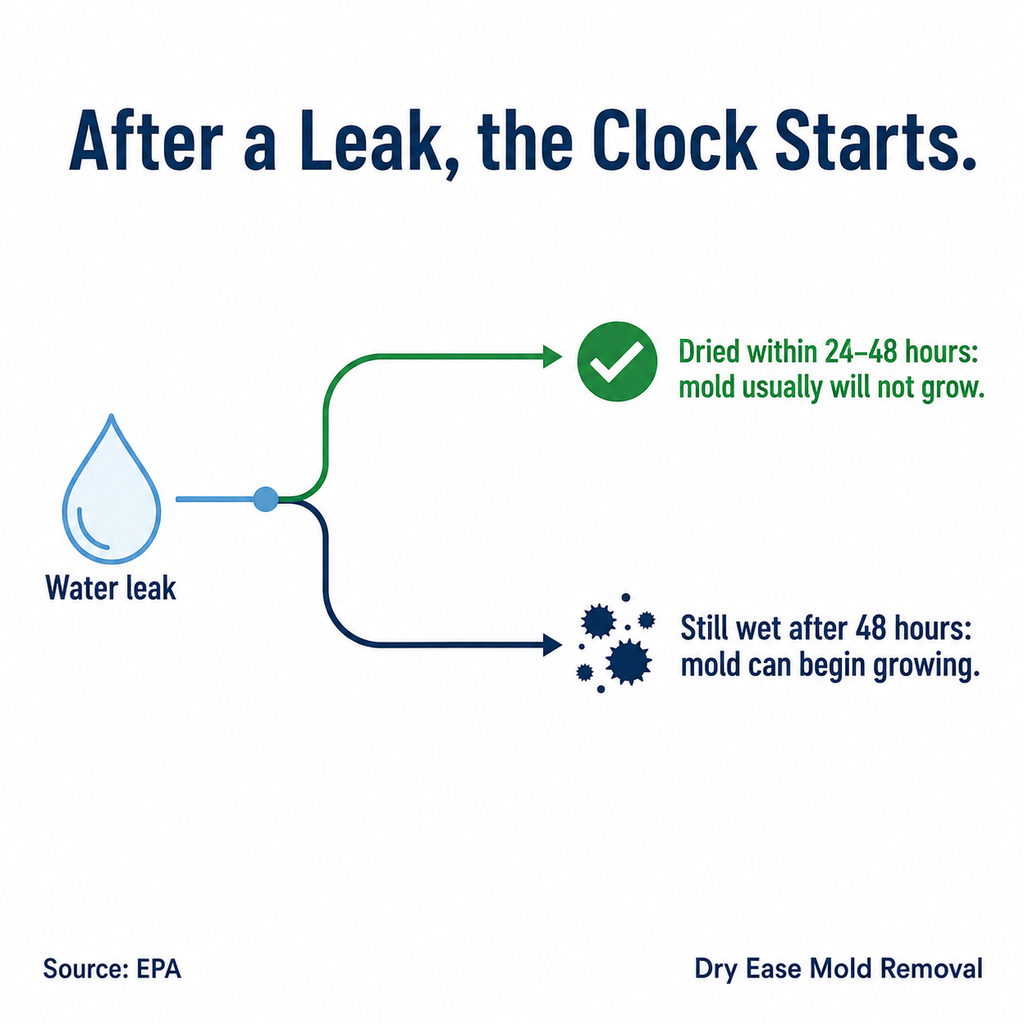
That is why we treat leaks and floods as urgent, and it is why fast water damage restoration matters so much. Drying everything within that first day or two usually prevents mold from growing at all.
4. Condensation That Keeps Coming Back
If your windows fog up every morning, or you find water beading on walls and pipes, your apartment is holding more moisture than it can vent. Over time, that constant dampness feeds mold growth, especially around window frames and on exterior walls.
Pre-war buildings make this worse in a few specific ways. Steam radiators pump out heat you often cannot control, which drives humidity up. Old single-pane windows stay cold in winter, so the moist indoor air condenses on the glass and the surrounding plaster. And many older bathrooms and kitchens have weak ventilation or none at all.
The EPA recommends keeping indoor humidity below 60 percent, and ideally between 30 and 50 percent. An inexpensive humidity gauge from a hardware store will tell you where your apartment stands. If you are consistently above that range, running an exhaust fan, cracking a window, or adding a dehumidifier can bring it down.
5. Allergy Symptoms That Flare at Home and Ease When You’re Away
Sometimes the first sign of a mold problem is how you feel. Common reactions to mold exposure include a stuffy nose, sore throat, coughing, wheezing, burning eyes, and skin rash.
The pattern is what matters. If your symptoms flare up at home and improve when you are at work or away for a weekend, something in your apartment may be a contributing factor, and mold is a common one. We are not doctors, and stuffy noses have plenty of causes, but that home-versus-away pattern is worth investigating.
If you are an otherwise healthy adult, a suspected mold problem is usually not a medical emergency. The CDC notes that damp and moldy environments can cause a range of health effects, or none at all, and in healthy people the symptoms are generally the mild, allergy-like ones listed above. You do not need to leave your apartment tonight over a musty smell. You do want to find the source and deal with it, because the exposure continues as long as the mold is there. If your symptoms are severe or getting worse, see a doctor.
Some people need to act on this sign faster than others. People with asthma or mold allergies can have stronger reactions, and children, older adults, and anyone with a weakened immune system or chronic lung condition are more vulnerable. If someone in your household is in one of those groups, do not wait on a suspected mold problem.
Where Mold Hides in NYC Apartments
Mold prefers dark, damp, still air, which means the places you rarely look. When we inspect apartments, these are the spots we check first:
| Where to look | What to check for |
|---|---|
| Bathroom | Grout, caulk, the ceiling above the shower, and behind the toilet, especially in bathrooms with no window |
| Kitchen | Under the sink, behind the refrigerator, and around the dishwasher supply line |
| Bedroom closets on exterior walls | Musty smell, spots on the wall behind hanging clothes, damp shoes or boxes on the floor |
| Windows | Sills, frames, and the wall directly below, where condensation drips and collects |
| Under sinks | Slow drips from supply lines and drain traps that keep the cabinet floor damp |
| Behind furniture on exterior walls | The wall behind a bed, couch, or dresser pushed against a cold outside wall, where air cannot circulate |
| Radiators and HVAC units | Leaking valves, condensation around AC sleeves, and the wall and floor beneath them |
| Basement or ground-floor storage | Cardboard boxes, fabric, and anything stored against a below-grade wall |
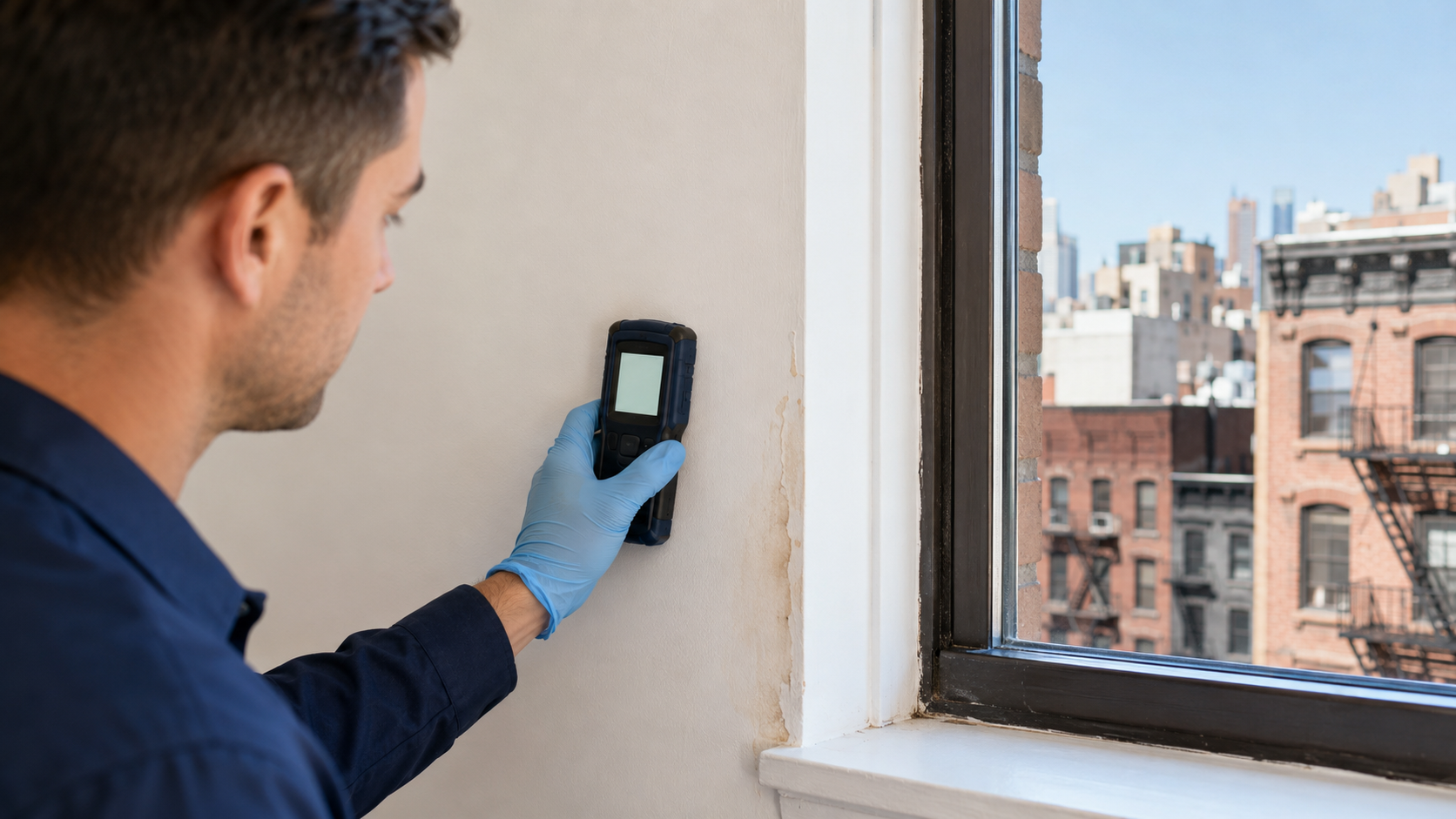
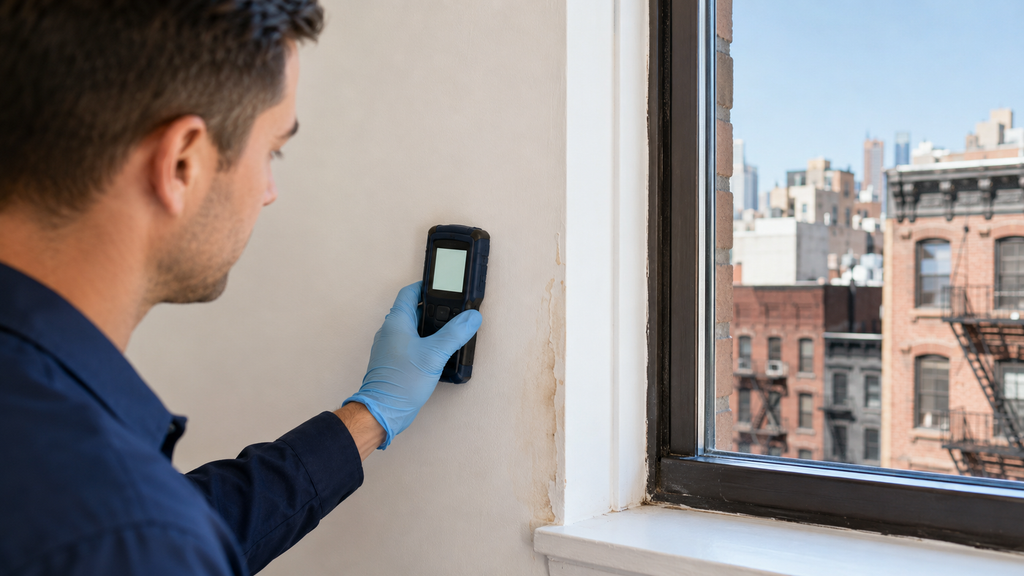
If the smell is there but you cannot find the source, the mold may be inside a wall or ceiling. A persistent musty odor should alert you to the possibility of hidden mold, along with damp spots or discoloration on the wall surface. Professionals find hidden growth with moisture meters, which detect wet areas inside walls, and small cameras inserted through tiny openings, so nobody has to tear the wall apart just to look. Our mold inspection process walks through exactly how we do this.
Is Black Mold More Dangerous Than Other Mold?
Color does not tell you how dangerous a mold is. “Black mold” is not a single species, and the EPA is clear that mold color does not determine health risk. The CDC’s guidance says the same thing: there is no need to identify the type of mold in your home, because all indoor mold growth should be handled the same way.
So finding dark mold is not a reason to panic, and finding a lighter color is not a reason to ignore it. Whatever the color, the response is the same. Find the moisture source, fix it, and remove the growth.
What to Do Next If You’re a Renter
If you rent, the fix is usually your landlord’s responsibility, and NYC law spells that out. Here is the order we recommend:
- Document everything. Take clear photos of the mold, the water damage, and anything else relevant. Note the dates. Keep taking photos if it spreads.
- Notify your landlord in writing. A text or email works, but keep a copy. A phone call leaves no record.
- Give them a reasonable chance to respond. Many landlords act quickly once notified, and the city expects you to try this step first.
- Call 311 if they don’t. You can file a mold complaint through 311 or directly with HPD. HPD contacts your building’s managing agent, and if the problem is not corrected, an inspector can come out and issue violations. If it still is not fixed, you can pursue repairs through Housing Court.
Your landlord’s obligations here are specific. Under Local Law 55, also called the Asthma-Free Housing Act, indoor mold is an official housing violation, which means your landlord is required to fix it. If your building has three or more apartments, the law says your landlord must:
- Inspect for mold every year
- Respond when you report a mold problem
- Remediate any mold that is found
One more rule applies to larger buildings. If your building has ten or more apartments and the mold covers more than 10 square feet, your landlord must hire state-licensed professionals to remove it, and the cost is theirs, not yours.
Can You Clean It Yourself, or Do You Need a Professional?
For small areas, you can handle it yourself. NYC health guidance says occupants can clean mold covering 10 square feet or less, which is roughly a 3-foot by 3-foot patch.
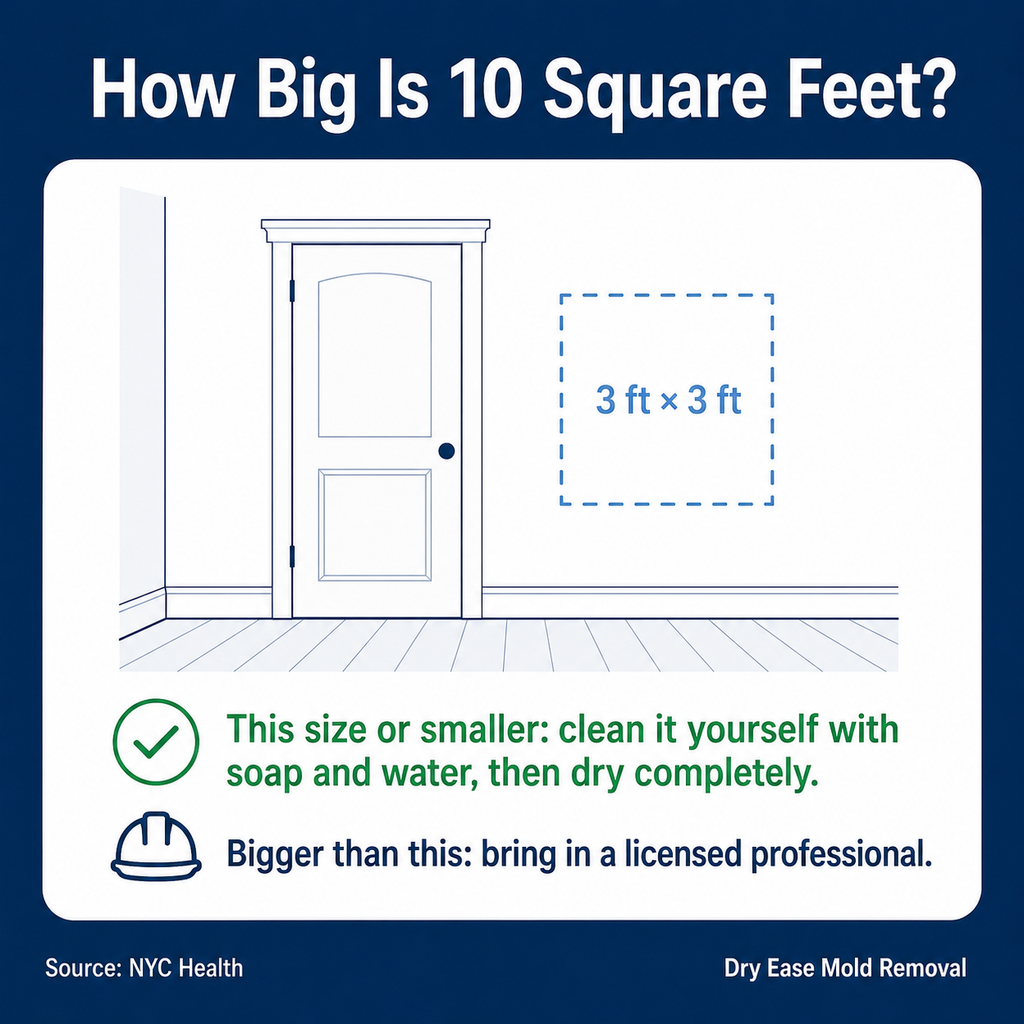
The method is simple: scrub the mold off hard surfaces with soap and water, then dry the area completely. Skip the bleach. The EPA does not recommend using bleach as a routine practice, because what matters is scrubbing the mold off and getting the area fully dry.
Two things push a job past what you should handle yourself: mold that has grown deeper than you can reach, and jobs big enough that the law requires a licensed professional.
The first is reach. Mold grows into porous materials like drywall and plaster. If growth has penetrated the material, scrubbing the surface leaves the rest behind, and it comes back. Mold inside walls, under floors, or in ventilation needs professional removal, because the affected materials often have to come out.
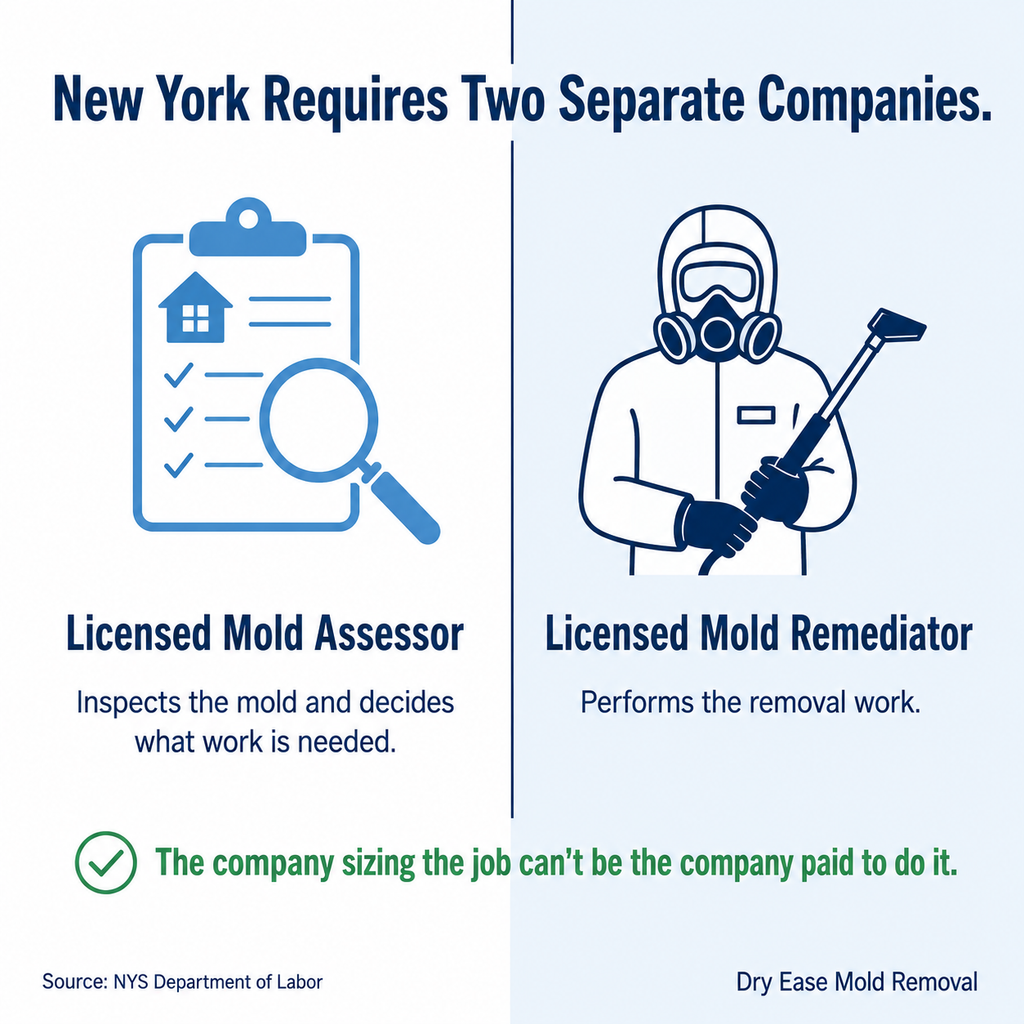
The second is the law. New York State requires that mold remediation projects be performed by licensed contractors. The state also requires two separate companies on a remediation project: a licensed assessor who decides what work needs to be done, and a licensed remediator who does the work. That rule protects you, because the company deciding how big the job is cannot be the same company getting paid to do it. At Dry Ease, we handle professional mold removal. When a project needs a formal assessment, we work with an independent licensed assessor, which keeps everything within state law. If you are weighing the decision, our guide to mold remediation costs in NYC lays out what to expect.
Frequently Asked Questions
How fast does mold grow after a leak in an apartment?
Mold can begin growing within 24 to 48 hours of water exposure. The good news is that the reverse is also true: if wet materials are dried within 24 to 48 hours, mold usually will not grow. That first day or two after a leak is your best chance to prevent a problem entirely.
Can I test for mold in my apartment myself?
You usually do not need to test at all. Health guidance treats all indoor mold the same regardless of type, so knowing the species does not change what happens next. If you can see mold or smell that persistent musty odor, the useful next step is finding the moisture source and the full extent of the growth. When a formal assessment is needed, for example in a landlord dispute or a larger remediation project, New York requires it to be done by a licensed mold assessor who is independent of the remediation contractor.
Will mold come back after cleaning?
It will if the moisture source is still there. Mold grows wherever moisture meets material it can feed on, so if you clean the growth but leave the leak, the condensation, or the ventilation problem in place, the mold will grow back. The EPA’s cleanup guidance is direct about this: the key to mold control is moisture control. That is why any good remediation plan starts with finding and fixing the water problem, not just removing what you can see.
Worried About Mold in Your Apartment? We Can Take a Look
If you have spotted one of these signs, or you smell something musty and cannot find the source, we are happy to help you figure out what you are dealing with. At Dry Ease Mold Removal, we offer free same-day assessments and 24/7 emergency response across all five boroughs, Westchester, Nassau County, New Jersey, and Connecticut. We have been doing this for over 20 years, and we will give you an honest answer about whether you have a real problem and what fixing it involves. Contact us or call (877) 215-8399 to schedule your free assessment.