
Mold testing (New York calls it mold assessment) is the diagnosis: a licensed assessor inspects your property, determines how far the mold goes and where the moisture is coming from, and writes a plan for fixing it. Mold remediation is the fix: a licensed contractor removes the mold and the affected materials by following that plan. In New York, state law prohibits the same company from doing both jobs on the same property. If a project needs both, you hire two separate, independent companies.
At Dry Ease Mold Removal, we handle the remediation. We have spent over 20 years removing mold across New York City, working alongside independent licensed assessors on every covered project. The question property owners ask us most often is some version of “which one do I need, and who do I call first?” This guide answers both.
What Is Mold Testing (Mold Assessment)?
A mold assessment is a professional inspection of your property by a licensed mold assessor. The assessor figures out where mold is growing, how large the affected area is, and what moisture problem is feeding it. Depending on the situation, that can include air or surface sampling, though sampling is only one part of the job.
When the assessment is done, you receive two things:
- An assessment report describing what the assessor found.
- A mold remediation plan for fixing the problem. Under New York’s guidance for property owners, the plan spells out:
- Which rooms need remediation
- The method for each area
- How the work area will be contained
- What the cleanup has to achieve before the job counts as done
- The moisture problem that has to be fixed so the mold does not come back
New York requires a licensed assessment for any mold project larger than 10 square feet. The remediation plan the assessor writes becomes the blueprint the remediation contractor must follow.
What Is Mold Remediation?
Mold remediation is the physical removal of the mold. A licensed mold remediation contractor takes the assessor’s remediation plan and writes a work plan, which lays out the exact steps and equipment the crew will use to carry that plan out. Then the contractor does the work: sealing off the affected area so spores cannot spread to clean parts of your property, removing the mold and any building materials too damaged to save, and cleaning and drying everything that stays.
When remediation is done, you receive the work plan, the completed removal, and a work area left ready for the final inspection.
This is the work we do at Dry Ease Mold Removal. Our remediation follows the ANSI/IICRC S520 standard and EPA guidelines, and we perform our own visual and moisture inspections to scope the job. When a project requires a formal assessment, an independent licensed assessor handles it, which is exactly how New York law says it should work.
Mold Testing vs. Mold Remediation at a Glance
| Mold Testing (Assessment) | Mold Remediation | |
|---|---|---|
| Purpose | Diagnose the problem: find the mold, measure the affected area, identify the moisture source | Fix the problem: remove the mold and affected materials |
| Who performs it | An independent licensed mold assessor | A licensed mold remediation contractor |
| License required | NYS mold assessment license | NYS mold remediation license |
| What you get | Assessment report and a mold remediation plan | Work plan, the remediation itself, and post-work cleanup |
| When you need it | Before remediation on any project over 10 square feet, and again after the work to confirm it passed | Whenever mold needs to be removed |
Why Does New York Require Separate Companies?
New York has licensed mold work since 2015 under Labor Law Article 32. The law creates three licenses: one for mold assessment companies, one for mold remediation contractors, and one for the individual workers who perform the physical abatement.
The part that matters most for you is the independence rule. No licensee may perform both the mold assessment and the mold remediation on the same property, and no person may own an interest in both the assessment company and the remediation company working the same property.
The reason is a conflict of interest. The company that diagnoses your mold problem should not be able to make more money by telling you the problem is bigger than it is. When the assessor has no financial stake in the remediation contract, the assessment reflects what your property actually needs. The final inspection works the same way. It comes from that independent assessor, not from the contractor checking its own work, so a passed inspection tells you the job was actually done right.
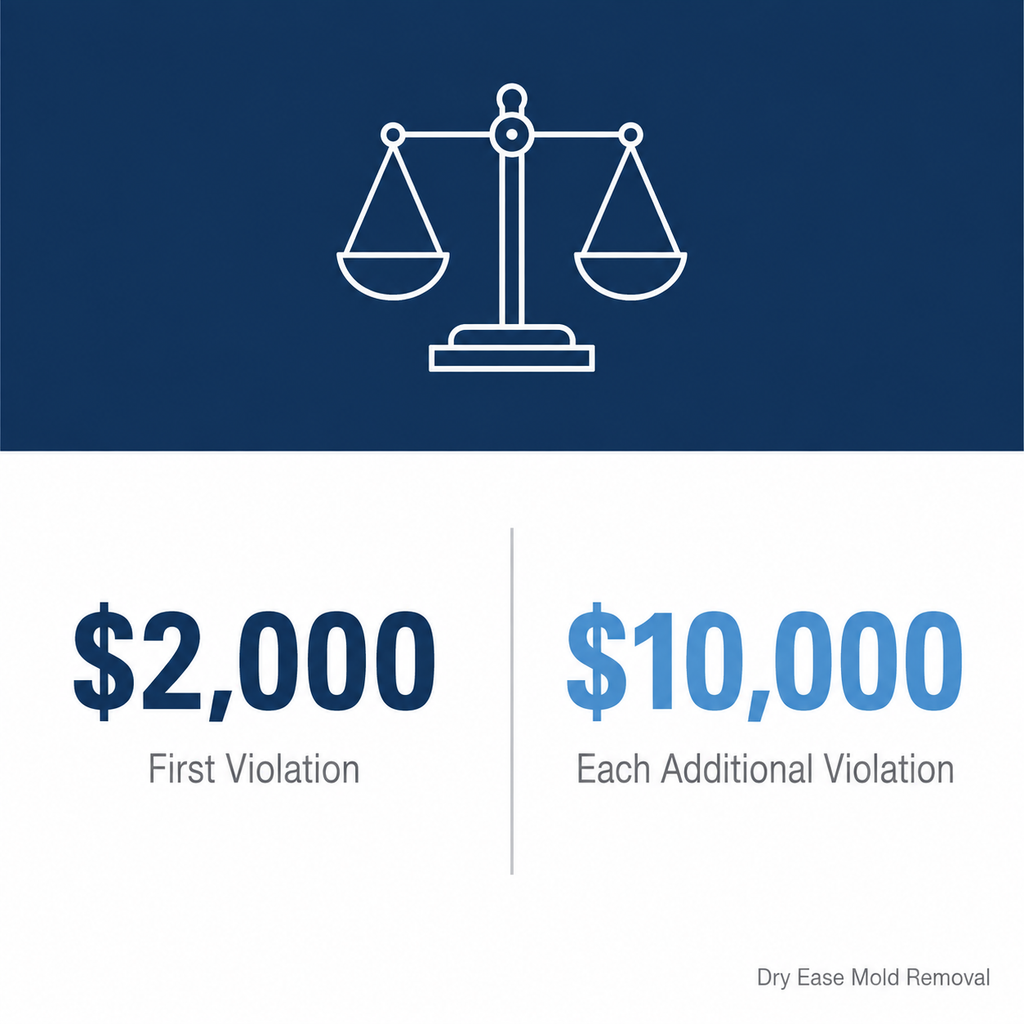
The state backs this up with real penalties. A licensee that breaks these rules can be fined up to $2,000 for a first violation and up to $10,000 for each one after that, and can have its license suspended or revoked. So if a company offers to test and remove your mold as one package, that offer is a warning sign, and you are the one the rule is protecting.
When Does the Law Apply? The 10-Square-Foot Rule
New York’s licensing requirements apply to mold projects involving areas greater than 10 square feet. For a patch smaller than that, roughly the size of a bath towel, the law does not require licensed professionals, and routine cleaning does not count as a mold project.
The law also exempts certain people from needing a license for work they do themselves:
- Homeowners performing mold work on their own residential property.
- Building owners, or their employees, doing mold work on buildings they own with four or fewer dwelling units.
- Owners, managing agents, or full-time building staff doing mold work on properties they own or manage, as long as they do not also run a mold business that serves the public.
- Government agencies and their employees working on government property.
Does an Exemption Also Skip the Independent Assessment and Clearance?
If you qualify for one of these exemptions, the next question is whether you can also skip the independent assessment and the clearance inspection. The honest answer is that the law is not fully clear on this point. The separation and assessment rules are written to apply to licensed companies. So an exempt owner or building employee doing the work personally does not appear to be required to bring in an independent assessor or obtain a formal clearance report. The Department of Labor has not said this outright, so treat it as how the statute reads rather than a settled rule.
Two things are true either way. First, the exemption only covers work you or your own staff perform. The moment you hire an outside company for a covered project, that company needs the proper license and the separation rules apply in full. Second, if you are an NYC landlord with three or more units, Local Law 55 still requires you to inspect for mold every year and correct what you find, no matter who does the work.
The Three-Step Process New York Requires
For any covered project, the legal order of operations looks like this.
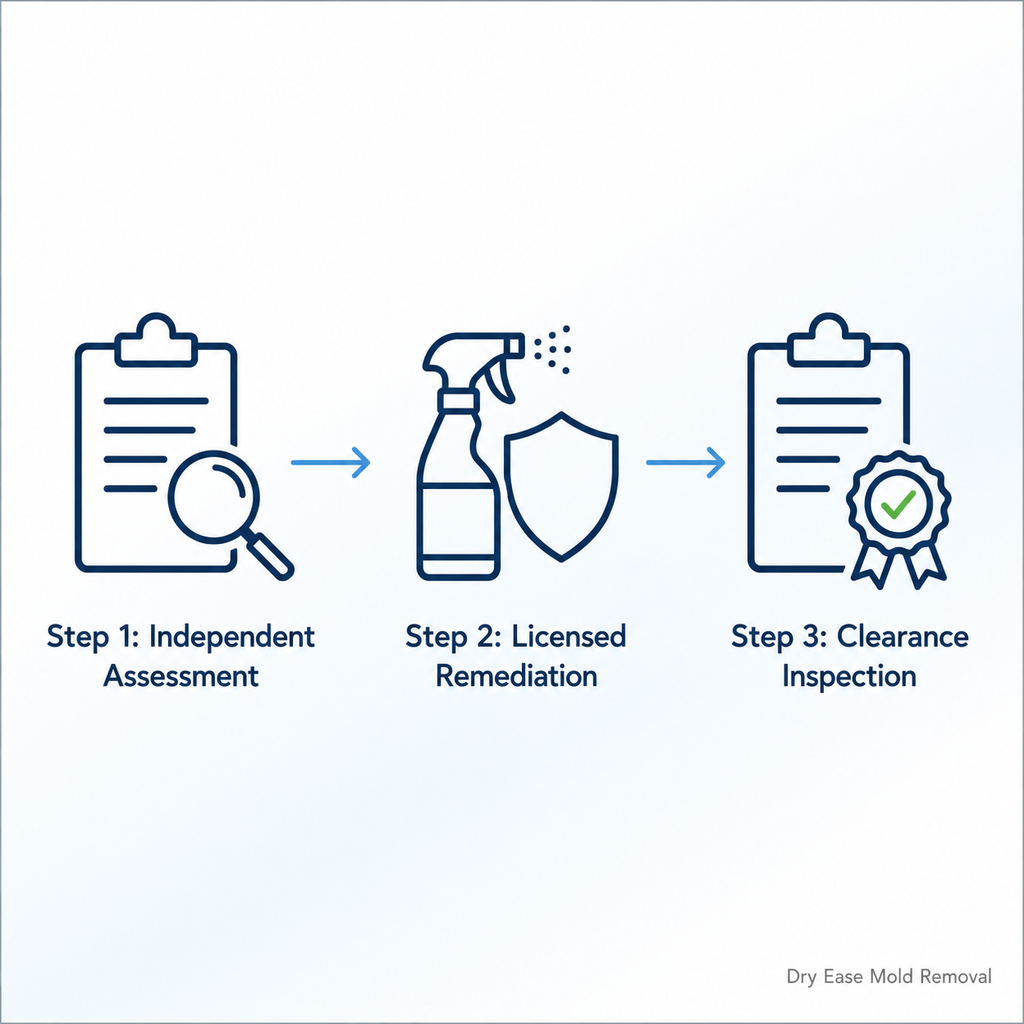
Step 1: Independent Mold Assessment
A licensed assessor inspects the property, identifies the mold and the moisture source, and gives you the assessment report and the mold remediation plan. You hire this company directly.
Step 2: Licensed Mold Remediation
A separately owned, licensed contractor does the physical work: the containment, removal, and cleanup described in the remediation section above. What matters at this step is the order of operations. The contractor works from the assessor’s remediation plan, so the diagnosis you paid for in step 1 sets the scope of the work in step 2.
Step 3: Post-Remediation Assessment (Clearance)
The same independent assessor returns to inspect the finished work. The assessor issues a clearance report only if the area is visibly free of mold and the work matches both the remediation plan and the contractor’s work plan.
What Happens If Clearance Fails?
If the work does not pass, the assessor issues a status report to you and the contractor listing what still needs to be corrected. The contractor must fix those items, and containment stays up until the assessor issues a passed clearance report. The job is not finished until the independent assessor says it is, which protects you from paying for work that did not solve the problem.
Do I Need Mold Testing If I Can Already See the Mold?
You may not need lab testing, but on a covered New York project you still need a licensed assessment. Those are two different questions, and it helps to keep them separate.
On the testing question, the EPA says that in most cases, sampling is unnecessary when mold is visibly growing. There are no federal limits for acceptable mold levels, so a lab result has no official standard to be measured against. If you can see mold, you already know you have mold, and the type does not change the fix: remove it and correct the moisture.
On the assessment question, the answer does not change just because the mold is visible. New York still requires a licensed assessment for any project over 10 square feet. Remember that an assessment covers more than sampling. The assessor maps the full extent of the problem, finds the moisture source, and writes the remediation plan the contractor is required to follow. Visible mold on one wall often traces back to a leak that has spread further than what you can see.
Hidden mold is the situation where investigation genuinely helps, whether or not the law requires it. If you smell a musty odor but see no growth, or you suspect mold behind walls or under flooring after a leak, a professional investigation can find the problem before you open anything up.
Who Do I Call First?
Here is the short decision path:
- Mold covers less than 10 square feet in your own home. The law does not require licensed professionals. You can clean it yourself or hire help if you would rather not deal with it. Fix the moisture source either way, or the mold will return.
- Mold covers more than 10 square feet. Call an independent licensed mold assessor first. You need the assessment report and remediation plan before a remediation contractor can legally do the work.
- You are not sure how big the problem is, or you suspect hidden mold. Call either professional and describe what you are seeing. If you call us at Dry Ease, we will tell you whether your project needs an independent assessment first.
What NYC Landlords and Property Managers Need to Know
If you own or manage residential buildings in New York City, two local laws sit on top of the state licensing rules.
Local Law 55 requires owners of buildings with three or more apartments to inspect every unit at least once a year for indoor allergen hazards, including mold, and to correct any hazards found.
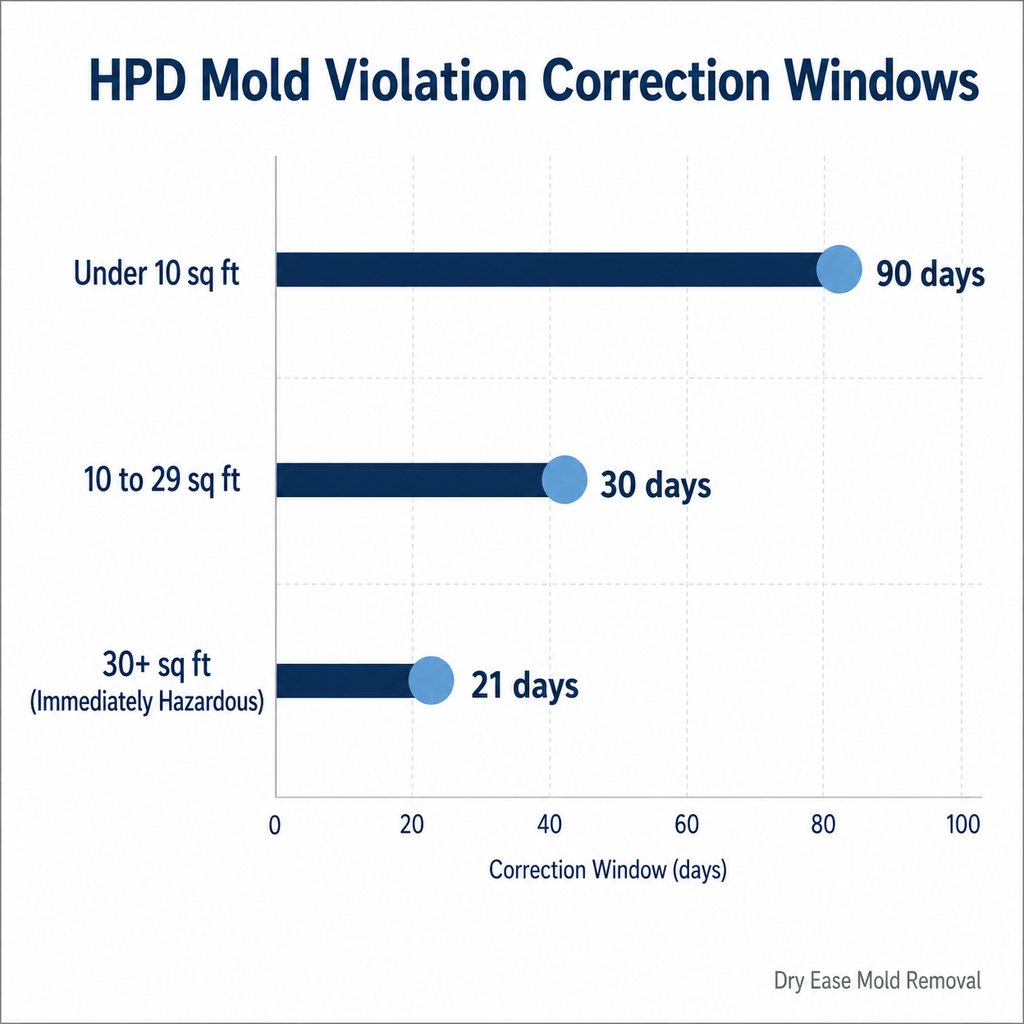
HPD mold violations come with deadlines based on the size of the growth. A violation for mold under 10 square feet in a room gives you 90 days to correct it. Mold covering 10 to 29 square feet gives you 30 days. Mold covering 30 square feet or more in a room is classified as immediately hazardous, and you get 21 days to correct it. Those windows are legal deadlines, and they start running when the violation is issued.
Local Law 61 adds filing requirements, but only for covered buildings: those with 10 or more dwelling units, or on a zoning lot with 25,000 square feet or more of non-residential floor area. For those buildings, the remediation contractor must notify the NYC Department of Environmental Protection at least two business days before work begins, and the assessor must file the post-remediation results with DEP within seven days of completion. There is an emergency exception that allows notice within 24 hours after work starts when the mold poses an immediate hazard or a court order requires fast completion.
We work with landlords and property managers on HPD mold violations regularly. The filings and deadlines are easy to miss or get wrong while you are also dealing with the mold itself. A remediation contractor who already knows these requirements is one less thing you have to manage.
How to Verify a New York Mold License
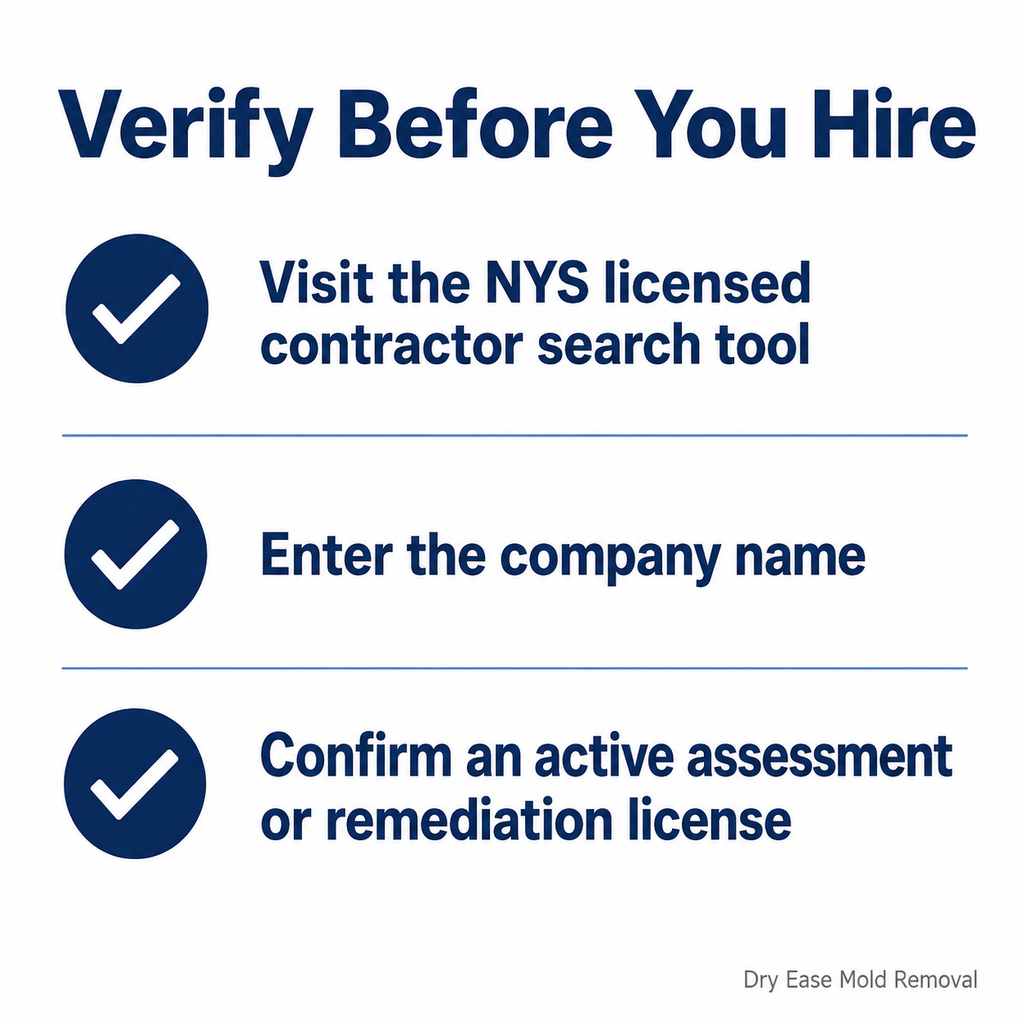
Before you hire anyone, check the license. The New York State Department of Labor maintains a public search tool for licensed mold contractors where you can confirm that a company holds a current mold assessment or mold remediation license. It takes a couple of minutes, and any legitimate company will expect you to check. For a fuller vetting checklist, see our guide on how to find a trustworthy mold remediation company in New York.
How You Pay for Mold Testing and Mold Remediation
Because New York requires two separate companies, you pay two separate bills. The assessor bills you for the initial assessment and again for the clearance inspection. The remediation contractor bills you for the removal itself. Budget for both from the start, since a covered project is not legally finished until the clearance inspection passes.
We are not able to put a general price on remediation here, because the cost depends on the size of the affected area, the materials involved, and how much containment the job needs. We go through those factors, and what they mean for a typical NYC job, in our NYC mold remediation pricing guide.
Frequently Asked Questions
Can the same company test and remove mold in New York?
No. New York Labor Law Article 32 prohibits any licensee from performing both the mold assessment and the mold remediation on the same property. The rule works property by property: a company is only barred from doing both jobs on the same project. The ban also extends to two companies that share an owner working the same property.
Is a mold inspection required before remediation in New York?
Yes, on any project covered by the licensing law. The assessor’s remediation plan has to exist before the contractor can legally start, and a reputable contractor will expect to see it.
What size mold problem requires a license in New York?
Any mold project involving an area greater than 10 square feet requires licensed professionals. Smaller areas and routine cleaning do not trigger the law.
Who pays for the clearance inspection?
You do, as the property owner. You hire the independent assessor directly for both the initial assessment and the post-remediation clearance inspection. Keeping the assessor’s payment separate from the remediation contract is part of what keeps the final sign-off honest.
Do I need a license to remove mold from my own home?
No. New York exempts homeowners doing mold work on their own residential property. If you hire an outside company instead, and the project is larger than 10 square feet, that company needs a license.
Does my landlord have to fix mold in my NYC apartment?
Yes. Under Local Law 55, owners of buildings with three or more units must inspect annually for mold and correct any hazards found. If a landlord does not act, tenants can report the condition to HPD, which can issue a violation with a legal deadline to fix it.
Found Mold? Here Is Your Next Step
If you have mold in your New York property, start by finding out how big the problem is. If the affected area is larger than 10 square feet, line up an independent licensed assessor first. When you are ready for the remediation side, we would like to be the company you call. At Dry Ease Mold Removal, we have handled mold remediation across all five boroughs, Westchester, Nassau County, New Jersey, and Connecticut for over 20 years. We hold a current NYS mold remediation license, and we work alongside independent assessors on every covered project. Call us at (877) 215-8399 and we will walk you through exactly where your situation falls and what should happen next.