
If water is coming into your apartment right now, three things come first. Keep yourself away from water that is near electricity, stop the water if you can reach a shutoff valve, and call your super or your landlord’s emergency line. Once the room is safe, take photos and video of everything before you clean any of it up, and get the apartment drying the same day.
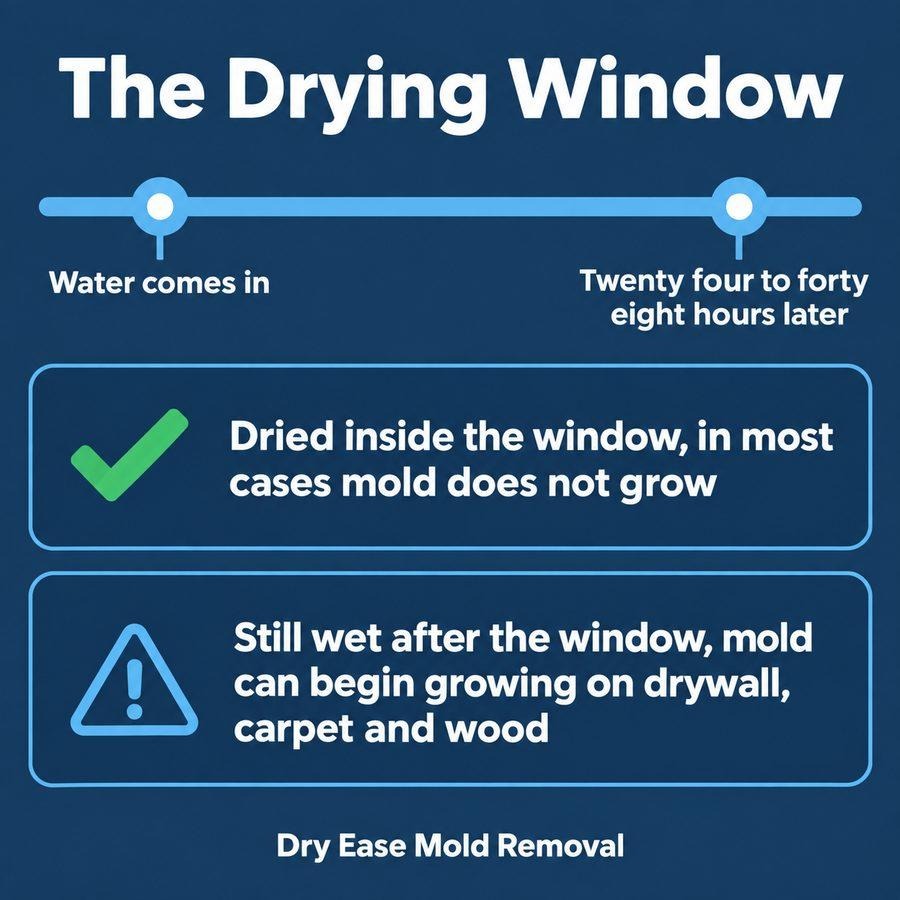
At Dry Ease Mold Removal we answer water emergencies in New York City apartments around the clock. The first thing we tell people on the phone is to start drying right away, because wet building materials can start growing mold within 24 to 48 hours.
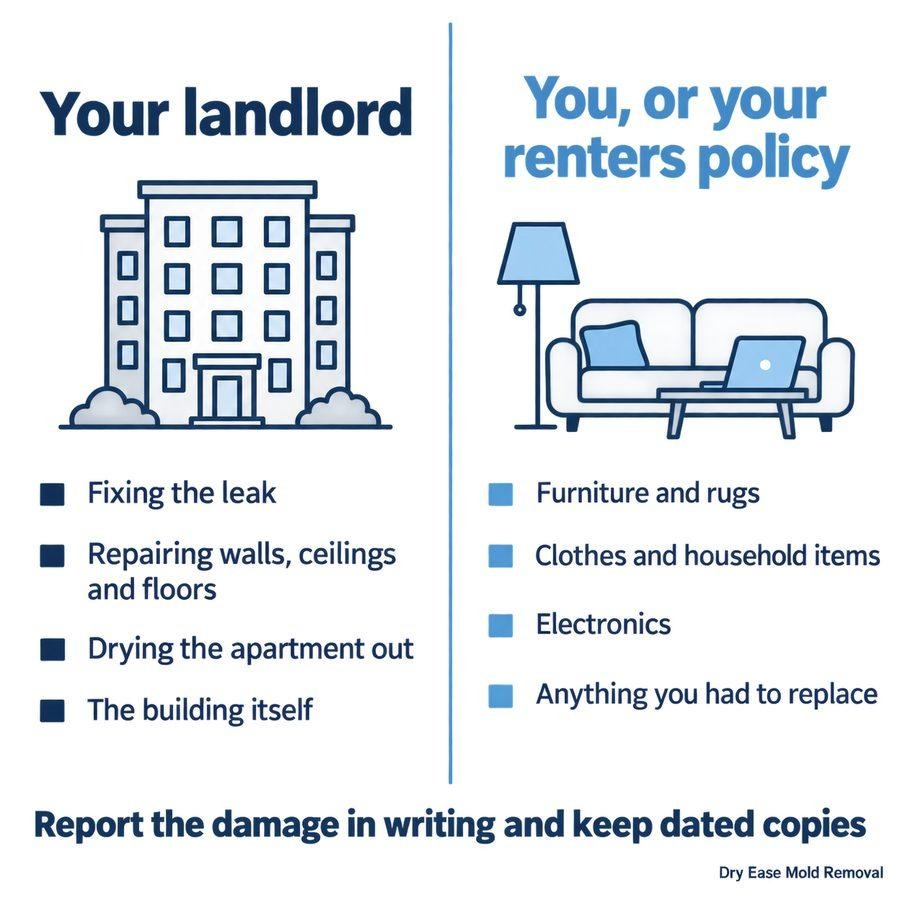
Your landlord has to fix the leak and repair the building, and that includes paying to dry it out. Your own furniture, clothes and electronics are your side of the line, which is what renters insurance is for.
What Do I Do First If Water Is Coming Into My Apartment?
In the first ten minutes, your job is to keep yourself safe and get the water to stop. Repairs, cleanup and phone calls all come after that.
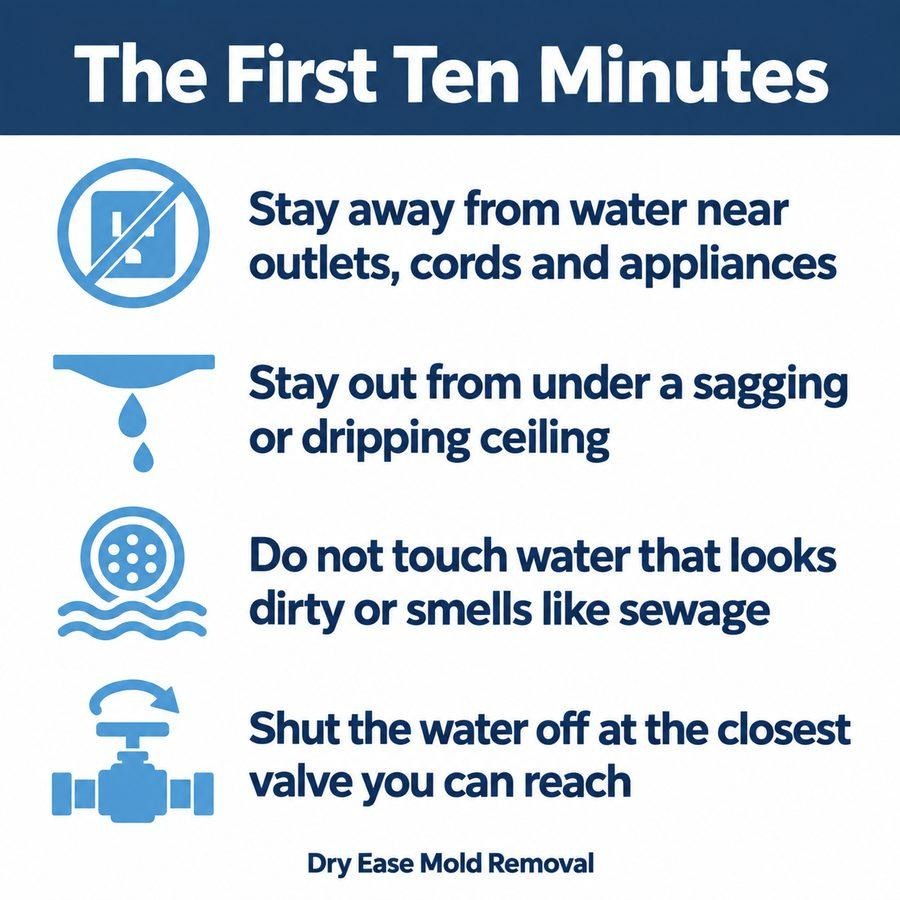
- Stay away from water that is near electricity. If outlets, cords, appliances or your electrical panel are wet or sitting in water, the water can carry current. The CDC’s guidance on electrical hazards is to shut the power off at the main breaker, but never to walk into standing water to get to it. If you would have to stand in water to reach the panel, leave the apartment and call an electrician or your super to shut it off. Do not touch a switch, a plug or an appliance while you are standing in water.
- Stay out from under a ceiling that is sagging, bulging or dripping. A ceiling that is holding water can come down without much warning, and wet plaster and drywall are heavy. Move anything valuable out of that room if you can do it without walking under the wet section, then close the door and stay out.
- Do not touch water that looks dirty or smells like sewage. Water backing up from a drain or a toilet is contaminated, and the CDC’s guidance on reentering a flooded home treats water that has touched sewage as a health hazard. Keep people and pets out of that room and have a professional handle it.
- Shut the water off at the closest valve you can reach. Under a sink and behind a toilet there is usually a small valve on the supply line that you turn clockwise to close. If the water is coming from a pipe inside a wall or ceiling, you cannot stop it yourself, so call the super to shut off the building line. If the water is coming down from the apartment above you, knock on that door, because the fastest fix is usually your neighbor turning off their own fixture.
If you cannot see where the water is coming from, tell your super that part too. A leak inside a wall or above a ceiling has to be traced before anyone can fix it, and finding hidden leaks like that is what leak detection work is.
Who Do I Call, My Landlord or a Plumber?
For a renter, the first call is to the building, not to a plumber. You generally should not be hiring and paying a plumber yourself for a repair the owner is responsible for.
- If you rent: call the super or the management company’s emergency line first, at whatever hour it is. Then send the landlord or management company a written message about the same problem, by email or text, so there is a dated record that they were told.
- If you own a co-op or condo unit: call the super or the managing agent for anything involving common plumbing, a pipe inside a wall, or water coming from another unit. For a fixture inside your own apartment, such as your own sink, toilet or dishwasher, you will usually be calling your own plumber.
- Call 911 if there is an electrical hazard you cannot get away from, or if part of the ceiling or floor looks like it could come down.
- Call 311 if the landlord or management company will not respond. New York City’s Department of Housing Preservation and Development asks you to contact the owner first and then file a 311 complaint if the problem is not addressed, and HPD can send an inspector.
A restoration company is a separate call, and it comes after the water has stopped, because drying a room that is still getting wet does not work. The plumber stops the leak. The restoration company dries out what the water already soaked. Both calls belong in the same day.
How Do I Document the Damage for My Landlord and Insurance?
Document everything before you start cleaning, because once the water is gone and the wet rug is in the hallway, you cannot prove what it looked like. New York City’s housing department tells renters to take pictures and write down specific details about the damage to the apartment and to your belongings both.
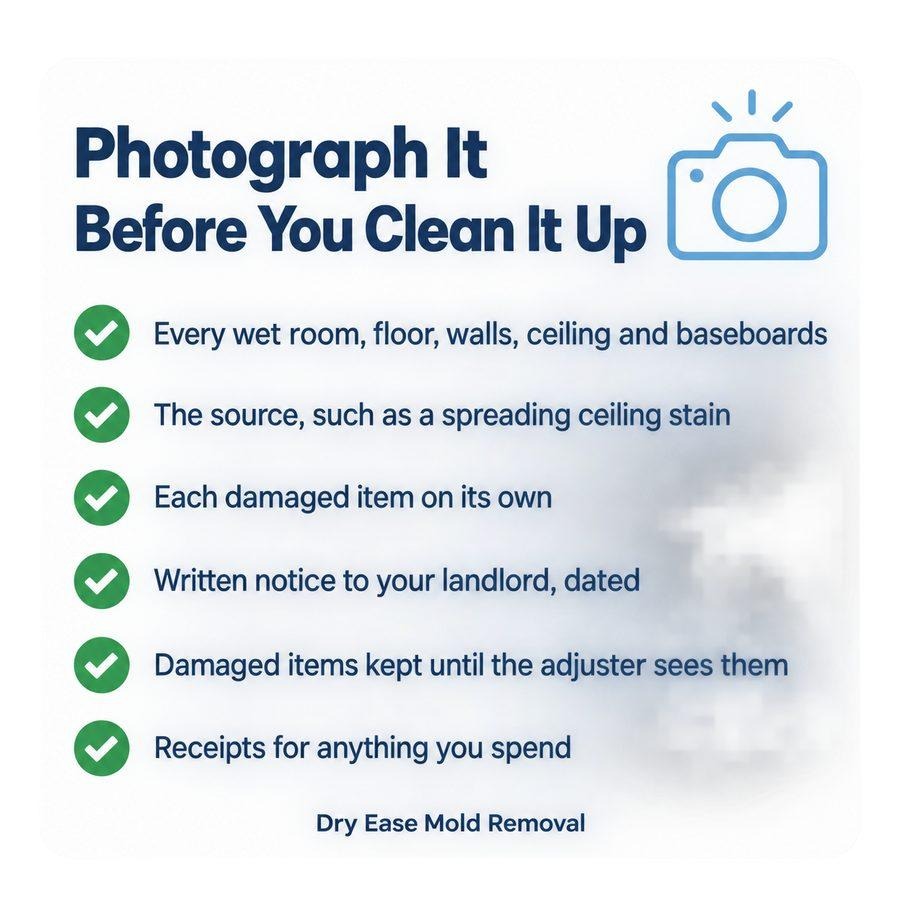
- Take timestamped photos and video of every wet room, including the floor, the walls, the ceiling and the baseboards.
- Photograph the source if you can see it, such as the stain spreading across the ceiling or the pipe that failed.
- Photograph each damaged item on its own, and keep the receipt or the model number if you have it. An insurance claim goes faster when you can hand over a full inventory of what was damaged.
- Send the landlord written notice of the damage and keep a copy. A text or an email is enough, and a dated record of when you reported it is what you will need later if the repairs are slow.
- Hold onto damaged items until you have photographed them and your insurance adjuster has either seen them or told you it is fine to throw them out.
- Keep receipts for anything you spend, including a dehumidifier, a hotel room or cleaning supplies.
How Fast Does Mold Grow After Water Damage?
Water damages drywall, carpet and wood framing on its own. Wet wood swells and warps, wet drywall discolors and the surface starts breaking down, and mold can start growing on any of it while it stays wet. Every bit of that comes from the materials staying wet, and drying them is what stops it. So the repair can wait a few days if it has to. The drying cannot, and it needs to start the day the water comes in.
Q: How fast does mold grow after water damage?
A: Mold can begin growing on wet building materials within 24 to 48 hours. The EPA’s guidance is that drying wet materials and areas within 24 to 48 hours will in most cases keep mold from growing at all, which is why the drying matters as much as the repair.
How Do I Dry Out My Apartment, and What Can I Handle Myself?
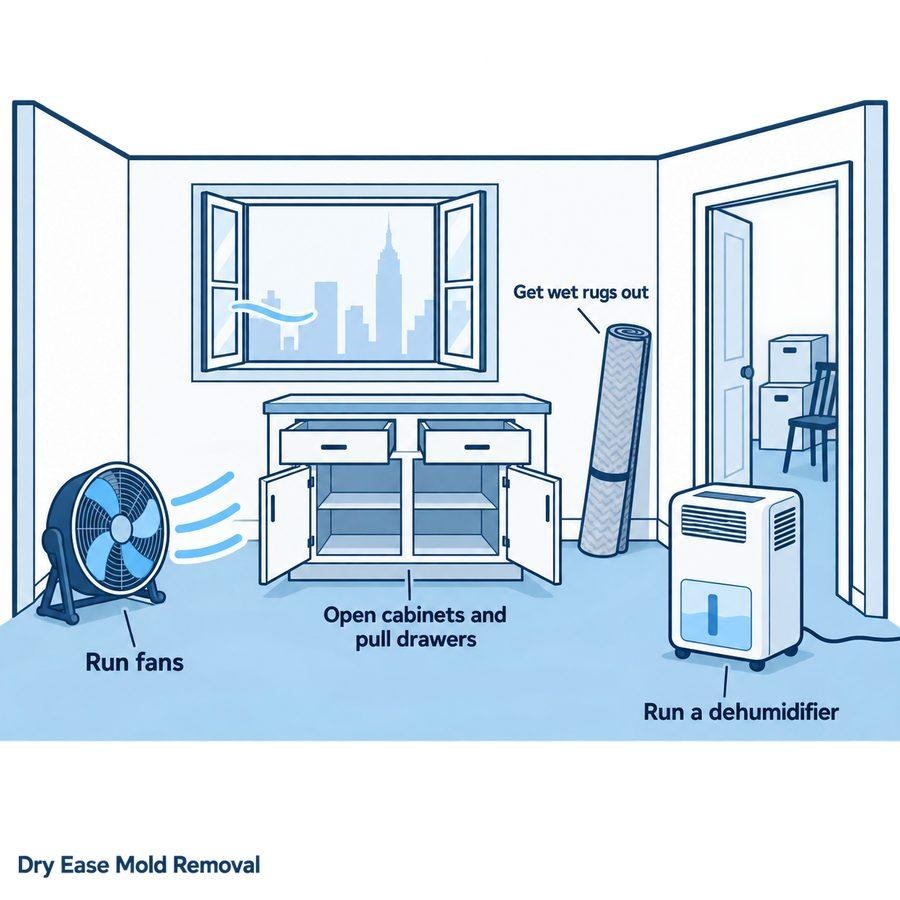
Start drying the same day, and keep it going. In the first 24 hours:
- Get standing water out with a mop, towels, or a wet/dry vacuum if you have one.
- Move furniture, boxes, books and electronics out of the wet rooms and into a dry one.
- Pull up rugs and wet carpet and get them out of the apartment if you can.
- Open closets, cabinets and vanities, and pull drawers out, so the air can reach the back of them.
- Run fans and a dehumidifier in the wet rooms. The EPA notes that fans, dehumidifiers and heaters speed up drying when you have power. The same guidance notes that household equipment on its own often cannot dry a home out when the air is very humid, which is common in a New York summer.
Some water damage you can dry out yourself, and some of it needs a licensed restoration company.
| You can usually handle this | Call a licensed restoration company |
|---|---|
| A small clean-water spill on tile or a sealed floor | Water that got inside walls, under floors or into subflooring |
| A wet area rug or a small piece of wet carpet you can lift and dry | Wall-to-wall carpet with soaked padding underneath |
| Surface water you can reach and wipe up within a few hours | A ceiling that is wet, stained, sagging or dripping |
| A damp spot that is fully dry the same day | Any water that came from a drain, a toilet or a sewer line |
| Anything still damp after 48 hours |
Every job in that second column involves porous materials, and porous materials do not dry the way a tile floor does. Carpet padding, drywall, ceiling tiles and insulation hold water inside them, and the EPA’s position is that absorbent materials which become moldy often have to be thrown out, because mold grows down into spaces nobody can reach to clean.
Is My Landlord Responsible for Water Damage Repairs, and Who Pays for My Stuff?
Your landlord is responsible for the repair. Every residential lease in New York carries the warranty of habitability, which requires the owner to keep the apartment fit to live in, and that duty covers keeping the apartment and the building in good repair, plumbing included, within a reasonable time that depends on how serious the problem is.
Drying the apartment out is part of that repair, so the restoration company is normally the landlord’s cost, not yours. Walls, ceilings, floors and pipes are the building, and the building is what the owner has to repair and what the owner’s insurance covers. So report the damage and ask the landlord or the managing agent to get a company in to dry it, instead of hiring one yourself and hoping to be paid back later. If you do hire someone yourself because nobody is answering, keep the invoice with the rest of your records.
Give the landlord written notice and a fair chance to fix it. If the repairs stall, file a complaint with 311, and if the condition is dangerous right now, say so, because that gets a faster response. An inspector can come out and cite the condition.
Your belongings are the other half, and they are usually yours to cover. Your landlord’s insurance covers the building itself and does not insure your personal property, so the sofa, the rug and the laptop come back to you or to your renters policy. Whatever caused the leak, report it to the landlord in writing and keep dated copies, so you have a record of what you reported and when.
If you do not have renters insurance, and the landlord did not cause the leak, damaged belongings are generally your own loss. That is worth knowing now, because it changes what you carry out of the wet rooms first.
My Upstairs Neighbor’s Leak Damaged My Apartment. Now What?
Take the same steps you would for any other leak. Stop what you can, document it, and report it to the super and the landlord in writing. Do not try to work it out privately with the neighbor, because the building needs to know a pipe or a fixture upstairs is failing. If your neighbor owns their unit, their insurance company may end up involved in paying for the damage, which is another reason your photos and your written notice matter.
In a co-op or condo building, the building tends to handle pipes inside the walls and the common plumbing, and the unit owner tends to handle the fixtures inside their own apartment. The proprietary lease or the bylaws for your specific building are what actually decide it, so ask the managing agent for the section that applies.
Does Renters Insurance Cover Water Damage?
Usually yes for a sudden accident, and usually no for outside flooding. The New York Department of Financial Services describes standard renters coverage as including water from plumbing failures, appliance failures and other accidental discharges, which is the burst pipe or the overflowing dishwasher. Flooding from outside is not part of a standard renters policy and has to be bought separately, so storm water coming in at street level is a different situation from a pipe bursting upstairs.
A slow leak that has been dripping for months is treated differently. Insurers generally exclude gradual damage and neglected maintenance. Call your insurance company the same day the damage happens, while the apartment still looks the way it did.
When Should I Call a Water Damage Restoration Company?
Call a restoration company when the water got into something you cannot open up and dry yourself. That means water inside walls, ceilings or floors, wet materials that are still damp after 24 to 48 hours, anything involving sewage or drain backup, and a musty smell that hangs around after the surfaces look dry. A smell after everything looks fine usually means something behind a wall or under a floor is still wet.
A water damage restoration company dries the building itself, not just the surfaces you can reach. That means pulling the water back out of the materials it soaked into, and running commercial air movers and dehumidifiers for as long as the drying takes. It also means treating the affected materials so nothing starts growing while they dry, and taking moisture readings until the readings say the wall is dry rather than until it feels dry to the hand. The written record of all of that is also what an insurance adjuster wants to see.
Who makes that call depends on whether you rent or own. If you own your apartment or you manage the building, you are calling a company directly. If you rent, tell your landlord or your managing agent that the apartment needs professional drying and ask them to arrange it, and pass along a number if you have one. We work with building owners and property managers as well as with residents, so a call from a landlord or a managing agent is routine for us. We respond 24 hours a day and the assessment is free, whoever ends up making the call.
If mold is already visible, that part is a separate job with its own rules: in New York, the company that performs the formal mold assessment and the company that performs the remediation cannot be the same company on a project larger than ten square feet. Our page on what a licensed NYC mold remediation contractor has to do covers how that works.
Frequently Asked Questions
Should I turn off the electricity?
Only if you can reach the breaker panel without stepping into water. If you cannot, leave the apartment and have your super or an electrician shut the power off instead.
What if my ceiling is bulging?
Get everyone out of that room and keep them out, and call the super or the management emergency line right away. Do not try to drain it yourself by making a hole in it.
Can I stay in my apartment if it is uninhabitable?
New York’s Attorney General says that when damage a tenant did not cause makes an apartment unlivable, the tenant may move out and cancel the lease without owing the remaining rent. The residential tenants’ rights guide sets out how that works.
Call Us for a Free Assessment
If your apartment got wet today, call us at (877) 215-8399 and we will come look at it. The assessment is free, and we respond 24 hours a day across all five boroughs, Westchester, Nassau County, New Jersey and Connecticut. We will tell you honestly whether this is something you can finish drying yourself or something that needs professional equipment, and if it needs equipment we can start the same day. If you rent, you do not have to be the one paying for that. Give the number to your landlord or your managing agent and we will handle the arrangements with them.