
The Honest Answer From a Licensed Mold Professional
And the honest answer is this: it depends — on your experience, your capabilities, and your general knowledge of construction.
If you’ve spotted mold in your home and you’re wondering whether to grab a bottle of bleach or pick up the phone and call a professional, you are not alone. This is one of the most common questions I receive as a licensed mold inspector, IICRC Building Sciences certified professional, and mold remediation contractor serving New York City and the surrounding boroughs.
That answer might feel unsatisfying at first. But after years of walking into homes where well-meaning homeowners, landlords, and even hired contractors made mold situations significantly worse, I can tell you that this nuance could save you thousands of dollars, protect your family’s health, and prevent a small mold problem from becoming a catastrophic one.
In this article, I am going to walk you through exactly what I have seen in the field, what the science says, and how to make the right decision for your home and your family.
Why Construction Knowledge Is the Foundation of Safe Mold Removal
Here is something most online guides will never tell you: mold removal is not really about the mold. It is about understanding buildings.
Mold does not appear randomly. It is always the result of moisture — a leak, excess humidity, poor ventilation, or water damage that was never properly addressed. If you do not understand how moisture moves through building materials, how ventilation systems work, and how different construction methods trap or release humidity, you cannot safely or effectively remove mold.
If you do not have a solid foundation in construction knowledge, you should not attempt mold removal yourself.
This is not about gatekeeping. This is about protecting you. I have been called to job after job where the mold was worse — sometimes dramatically worse — because someone without construction knowledge attempted remediation first.
The mold you can see is almost never the whole story. The U.S. Environmental Protection Agency provides detailed guidance on mold health risks and remediation standards.
Step One Before Anything Else: Get a Professional Mold Inspection
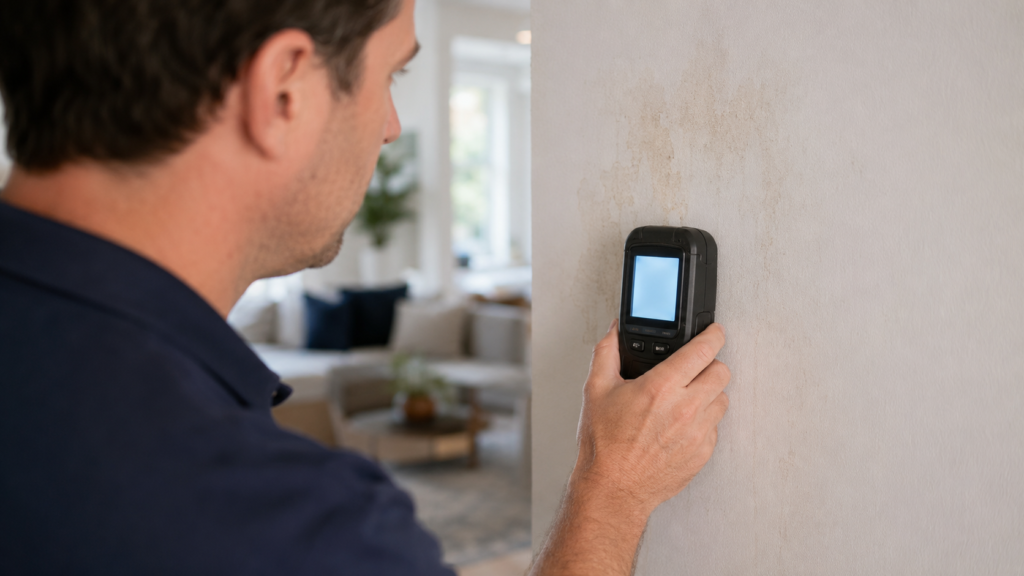
Before you make any decision — DIY or professional remediation — the single most important first step is a professional mold inspection and assessment.
A qualified mold inspector is not simply looking at the visible mold. They are investigating the entire building environment to identify the root cause of the mold growth. Without identifying and eliminating the source, any mold removal — professional or DIY — is temporary at best.
What a Thorough Mold Inspection Should Include
A licensed mold inspector with building science knowledge should evaluate all of the following:
- Sources of moisture — Where is the water originating from?
- Humidity levels — Is the indoor relative humidity elevated beyond safe levels?
- Active or historical leaks — Roof leaks, plumbing failures, foundation seepage
- Water damage history — Previous flooding, water intrusion, or chronic dampness
- Building history — Age of the structure, prior renovations, known vulnerabilities
- Humidity control systems — HVAC performance, mechanical ventilation, dehumidification capacity
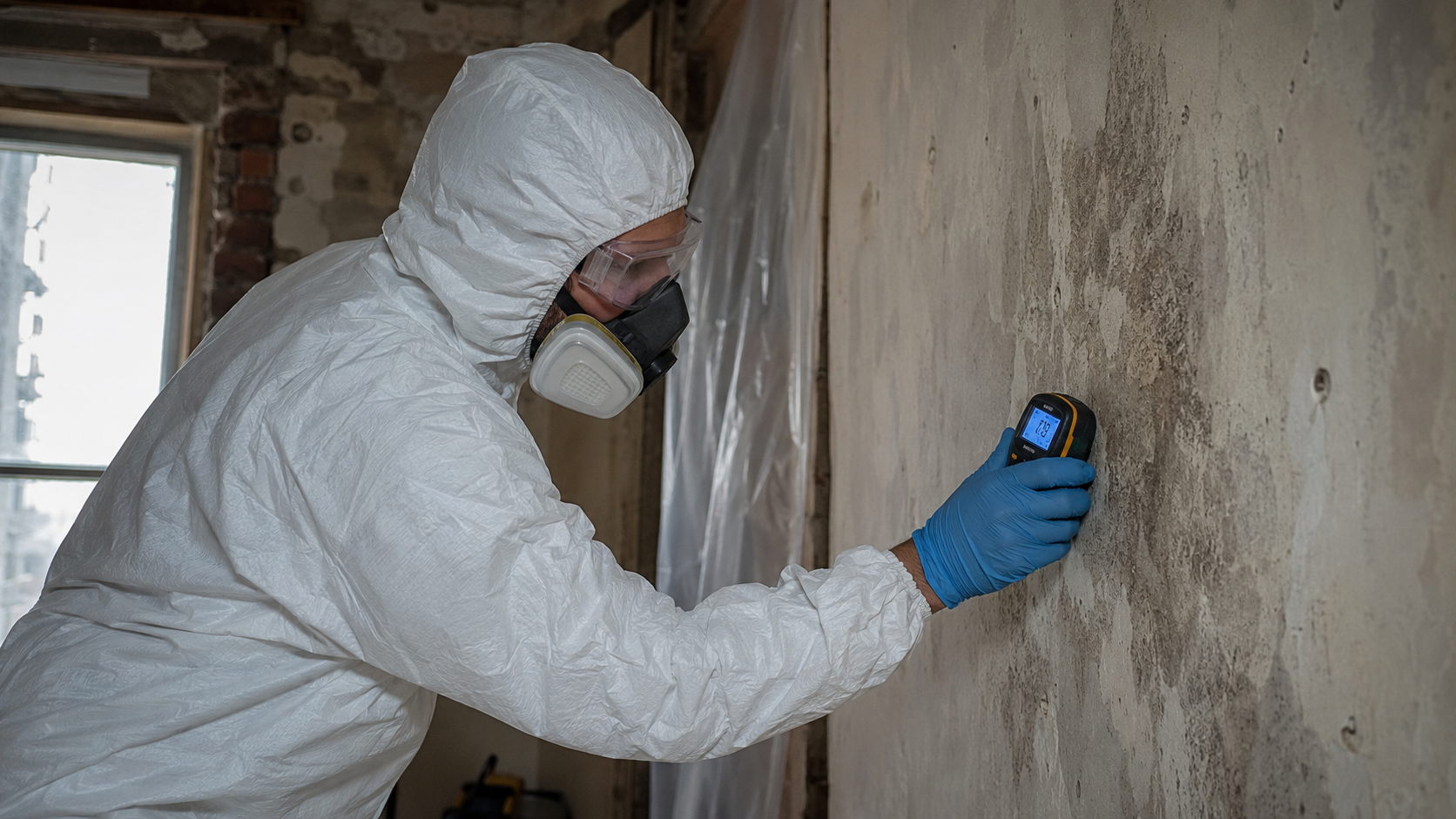
- Moisture content of building materials — Using a professional moisture meter to measure what is inside the walls, not just on the surface
That last point is critical. A moisture meter tells the real story. What you see on the surface of a wall is often a fraction of what is happening inside it.

What I Have Seen in the Field: When DIY Goes Wrong
Over the years, I have responded to countless situations where homeowners and landlords attempted to address mold themselves — and made the situation significantly worse. Let me share what I have actually encountered, because no generic article online can give you this perspective.
The Homeowner Who Guided the Contractor
One of the most common scenarios I encounter is a homeowner who has done their research online and essentially becomes the project manager of their own mold removal — hiring a general contractor who has no knowledge of humidity control or moisture mitigation, and then guiding them step by step based on what they read on the internet.
I have seen homeowners purchase air scrubbers, rent dehumidifiers, buy professional-grade disinfectants, and hand them directly to a contractor with instructions on how to use them. The contractor, not wanting to lose the job, follows along. The result looks like remediation. The building material appears dry. The visible mold is gone.
But the underlying moisture source was never identified. The leak continued. The mold came back — sometimes within weeks — and by the time I arrived, the problem had spread far beyond the original affected area.
Landlords, Supers, and Building Porters
This scenario is even more common in New York City rental buildings. A tenant reports mold. The landlord sends the building super or a porter to clean it up. These are hardworking people, but they are not mold remediation professionals. They are not trained in building science, moisture detection, or containment procedures.
The mold gets wiped down. The surface looks clean. But the underlying leak — a slow pipe drip, a compromised roof membrane, a failing window seal — continues to feed moisture into the building material. The mold returns. In many cases I have seen the mold return multiple times before a proper inspection was ever ordered.
The Bleach Myth: Why Bleach Does Not Kill Mold
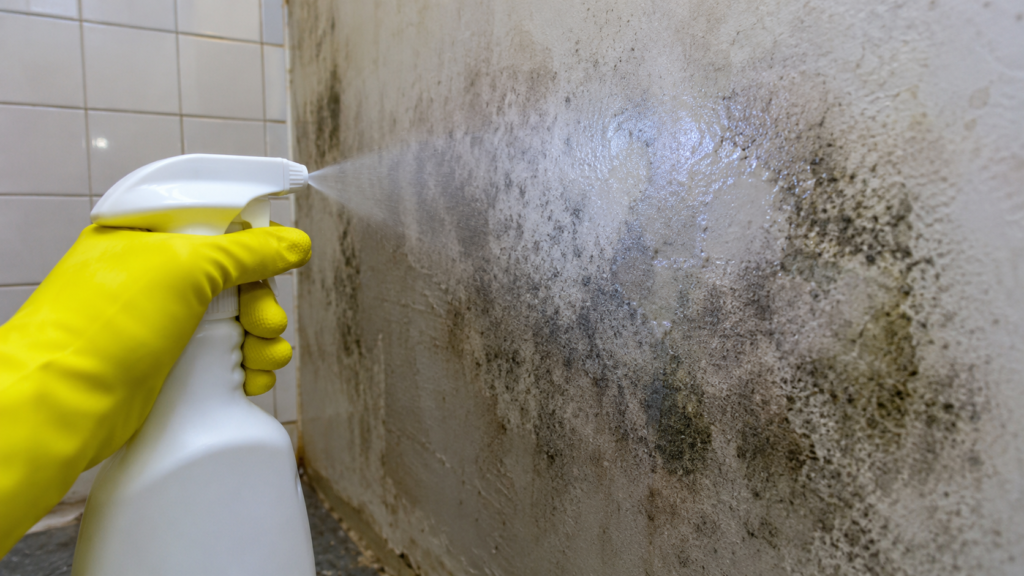
Let me be direct about something that is repeated constantly online and is simply not true: bleach does not kill mold.
What bleach does is remove the color from mold, making it visually disappear from the surface. The surface looks clean. The dark staining is gone. But the mold itself — its root structure, its spores, its biological presence in the building material — remains.
When I arrive at a job where bleach has already been used, here is what I find: a surface that looks clean to the naked eye, but building material that is still damp when I test it with a moisture meter. The mold is still there. It is just invisible to you now, which is arguably worse because it gives a false sense of security.
Bleach also has another problem on porous materials like drywall and wood: the water content in bleach actually adds moisture to the surface, which can feed further mold growth. It is one of the most counterproductive things a homeowner can do, and unfortunately it is one of the most common.
Older New York City Buildings: A Special Challenge
New York City’s older housing stock presents unique and serious mold challenges that are unlike almost anywhere else in the country.
Older buildings in the city have the biggest problems when it comes to mold — and it comes down to two things: plaster construction and old piping.
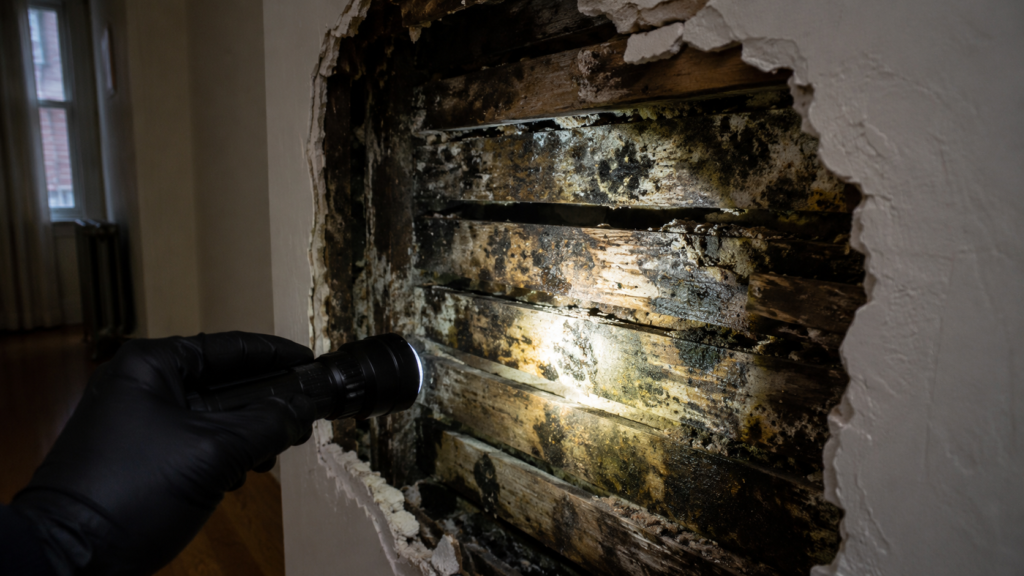
In pre-war and early post-war buildings, walls are not drywall. They are plaster applied over wood lath — thin strips of wood nailed horizontally across wall studs. When moisture enters this type of wall assembly, it does not behave the way it does in modern drywall construction.
Old piping in these buildings — galvanized steel, cast iron, lead — sweats, corrodes, develops pinhole leaks, and allows moisture to sit and migrate for prolonged periods of time. That moisture travels slowly through the plaster and into the lath behind it, where it sits in a dark, warm, undisturbed environment. Perfect conditions for mold.
Here is the deceptive part: plaster is actually somewhat resilient to surface mold. The exterior of an old plaster wall might look fine — maybe a little discolored, maybe slightly soft to the touch — while behind that wall, in the lath and the cavity between the studs, mold has been festering for months or even years.
This is why experience with different layers of building material matters so much. Some older buildings also have metal bracing or structural elements behind the plaster that change how moisture moves and how remediation must be approached. Every old building in New York City is different. You need a technician who has worked in enough of them to read the signs correctly. And that is exactly why you always start with a moisture meter reading, not a visual inspection alone.
How Mold Affects Children and Vulnerable People
Young children are particularly vulnerable to mold exposure. Their respiratory systems are still developing. They are breathing more air relative to their body weight than adults. And they spend more time at floor level, closer to damp building materials and carpeting where mold concentrations can be higher.
The health effects of mold exposure in children — and in elderly people, and in anyone with a compromised respiratory system — include chronic coughing, worsening asthma, allergic reactions, sinus infections, and in serious cases, more significant respiratory illness.
What children need more than anything is the best possible indoor air quality. Mold — even mold that has been bleached and appears to be gone — continues to release spores and mycotoxins into the air. A family living with hidden or improperly remediated mold is breathing compromised air every single day.

Red Flags That Tell You This Is Absolutely Not a DIY Job
After years of inspections, I can usually tell within minutes of arriving at a property whether I am dealing with a situation that was hidden, covered up, or deliberately minimized. Here are the red flags I look for:
Buyers and sellers in real estate transactions. This is one of the most common situations where mold gets concealed rather than remediated. A homeowner preparing to sell, or a landlord preparing a unit for a new tenant, has a financial incentive to make the problem disappear visually. Fresh paint over mold, bleach applied to dark staining, new drywall installed over wet framing — I have seen all of it. If you are buying a home in New York City, a professional mold inspection is not optional. It is essential.
The leak that was never fixed. If there is any active or historical water intrusion — a roof leak, a plumbing issue, a basement that floods — and mold removal has been attempted without first resolving the moisture source, you have a serious problem. The mold will always come back until the water is gone.
Mold in the spaces where you live and sleep. If mold is present in your bedroom, living room, or any space where you and your family spend significant time, professional remediation is not a question. This is not the situation for a DIY experiment.
The Two Places NYC Homeowners Almost Never Check
In all my years of inspections, there are two areas that homeowners consistently overlook — and where I find serious mold problems that have been growing completely undetected:
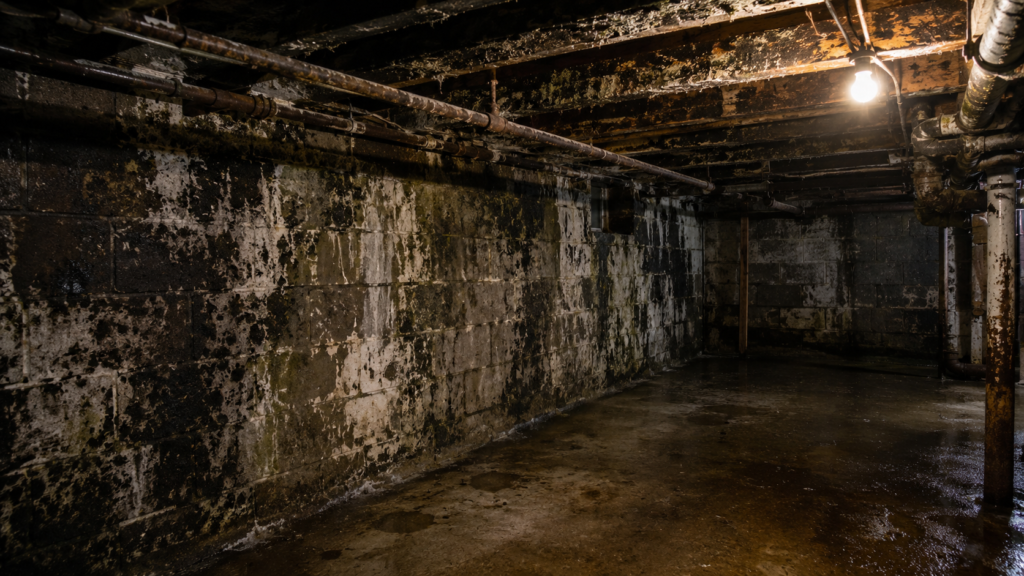
Basements. Most homeowners in New York City never check the humidity levels in their basement. A basement with relative humidity above 60% is a mold factory. Condensation on pipes, damp concrete, poor drainage, and minimal air circulation create ideal mold conditions. And because basements are often used for storage and not regular living, the mold can grow for years before anyone notices.
Attics. Poor attic ventilation is one of the leading causes of mold in New York City homes — particularly in attached row houses and brownstones. Warm, moist air rises from the living spaces below, hits the cold roof sheathing, condenses, and feeds mold growth on the underside of the roof deck. Homeowners almost never go into their attics. By the time the mold is discovered, it has often covered significant portions of the structural sheathing.
When Mildew on Non-Porous Surfaces Can Be a DIY Job
Now let me be fair and balanced, because not every mold situation requires a professional.
There is an important distinction between mildew and mold that most homeowners do not know. Mildew is a surface-level fungal growth that tends to develop on non-porous materials — plastic shower curtains, metal fixtures, ceramic tile, glass. It sits on the surface and does not penetrate the material.
If you have mildew on a non-porous surface, you have adequate ventilation in that room, and there is no underlying moisture issue or leak, you can likely address it yourself with the appropriate cleaning product and basic protective equipment.
The key word is non-porous. Once you are dealing with mold on drywall, wood, insulation, concrete, or any other porous building material, the calculus changes entirely. Mold penetrates porous surfaces. Cleaning what you can see on the outside does not address what has grown into the material itself.
What My IICRC Building Sciences Certification Actually Means
When you hire a mold professional, credentials matter — but understanding what those credentials actually mean is just as important.
My IICRC Building Sciences certification represents formal training in water mitigation and the science of how buildings manage moisture. The IICRC — the Institute of Inspection, Cleaning and Restoration Certification — is the industry’s leading standard-setting organization. This training covers how water moves through building assemblies, how to properly dry structural materials after water damage, and how to evaluate moisture conditions scientifically rather than visually.
But I want to be honest about something: certification is the foundation. Experience builds on top of it. My real-world expertise in mold assessment and remediation has come from years of inspections — walking into buildings of every age and type across New York City, reading moisture meters, identifying sources, and understanding what I am seeing beneath the surface of a wall.
When you hire anyone to work on mold in your home, you need both: formal training and verified real-world experience.
The Real Cost of DIY Mold Removal vs. Hiring a Knowledgeable Professional
One of the biggest reasons homeowners attempt mold removal themselves — or hire the cheapest contractor they can find — is cost. But doing it yourself, or hiring a contractor who does not know what they are doing, is almost always more expensive in the end. Not just in dollars — but in time, health, and quality of life.
What Each Path Actually Costs in New York City
Scenario 1 — DIY Removal: Supplies ($50–$150), rented equipment ($200–$500), 15–30 hours of your time. Moisture source never identified. Mold returns and spreads. Licensed professional eventually called — now a bigger job at $2,500–$6,000+. Total: $2,750–$6,650 or more.
Scenario 2 — General Contractor with No Mold Expertise: Initial contractor fee ($500–$1,500), equipment ($200–$600), mold returns, second attempt ($500–$1,000), licensed pro finally called ($2,500–$7,000+). Total: $3,700–$10,100 or more.
Scenario 3 — Licensed Mold Professional from the Start: Full inspection ($300–$600), professional remediation ($1,500–$4,000). Problem resolved. No return visit needed. Total: $1,800–$4,600 — paid once.
Cost breakdown by scenario — NYC estimates
| Cost Item | 🚫 DIY Removal | ⚠️ General Contractor | ✅ Licensed Professional |
|---|---|---|---|
| Supplies & cleaning products | $50–$150 | Included in fee | — |
| Rented equipment (dehumidifier, air scrubber) | $200–$500 | $200–$600 | — |
| Initial contractor fee | — | $500–$1,500 | — |
| Full mold inspection & assessment | — | — | $300–$600 |
| Professional remediation (licensed) | — | — | $1,500–$4,000 |
| Second attempt after mold returns | $500+ (likely) | $500–$1,000 | Not needed |
| Licensed pro called (round 2 — larger job) | $2,500–$6,000+ | $2,500–$7,000+ | Not needed |
| Moisture source identified & resolved | Rarely | Rarely | Always |
| Problem fully solved after first job | No | No | Yes |
| Estimated Total Cost | $2,750–$6,650+ | $3,700–$10,100+ | $1,800–$4,600 |
Hidden costs that never appear on any invoice
| Hidden Cost | What It Actually Means for You |
|---|---|
| ⏱ Time lost | Researching online, managing contractors, scheduling repeat visits, watching mold return. Every day you spend chasing an unresolved problem is a day your family breathes compromised air. |
| 🏥 Health costs | Doctor visits, allergy medication, respiratory treatment — especially for children whose lungs are still developing. Unresolved mold means ongoing daily exposure. These costs never appear on a remediation invoice but they are very real. |
| 🏚 Structural damage | Every week the moisture source goes unresolved, mold spreads further into framing, insulation, and subflooring. What costs $2,000 to remediate today can cost $6,000 or more in six months as the scope expands. |
| 🔄 Backtracking cost | When a licensed professional is finally called after failed attempts, they must diagnose what was already done, why it did not work, and what damage was caused. That backtracking adds time and cost to a job that should have been straightforward from the beginning. |
Quick reference — DIY vs. call a professional
| Situation | DIY Possible? | Call a Pro? |
|---|---|---|
| Mildew on tile, plastic, or metal (non-porous surface, no leak) | ✓ Yes | Optional |
| Mold on drywall, wood, insulation, or concrete (porous materials) | ✗ No | ✓ Yes |
| Active or unresolved leak or water intrusion present | ✗ No | ✓ Yes |
| Mold in bedroom, living room, or main living area | ✗ No | ✓ Yes |
| Infants, children, elderly, or immunocompromised in the home | ✗ No | ✓ Yes |
| Toxic mold (Stachybotrys / black mold) confirmed or suspected | ✗ No | ✓ Yes |
| Bleach or contractor already attempted removal and mold returned | ✗ No | ✓ Yes |
| Buying or selling a home with suspected mold | ✗ No | ✓ Yes |
Bottom line: Hiring a licensed, IICRC-certified mold professional from the start is the least expensive path in almost every real scenario. The mold is resolved once. The source is found. You pay one bill — and you move on with your life. Schedule your free assessment with Dry Ease Mold Services here.
What Hiring Right the First Time Actually Costs You
Hiring an experienced, licensed, IICRC-certified mold remediation professional from the start means one assessment, one remediation plan, one bill — and a problem that is actually resolved. The source is identified. The moisture is addressed. The affected materials are properly treated or removed. You receive a clear prevention plan and you move on with your life.
The upfront cost of doing it right is almost always lower than the total cost of doing it wrong first and then doing it right second. And that calculation does not even include the cost of health impacts, time lost, or stress.
When you are evaluating the cost of mold remediation, do not compare prices alone. Compare outcomes. The right professional resolves your problem once. The wrong one — or the DIY approach without proper knowledge — costs you more, takes more from you, and leaves your family in a compromised environment far longer than necessary.
The Most Important Thing NYC Homeowners Need to Know
If there is one thing I want every New York City homeowner to take away from this article, it is this:
The most important factor in any mold job is the experience of the technician who shows up at your door.
Not the machine they bring. Not the product they use. Not the price they quote you. The technician’s ability to read a building, understand moisture dynamics, identify the true source of the problem, and execute remediation in a way that actually solves it — that is what determines whether your mold problem is truly resolved or simply postponed.
Ask questions before you hire anyone. How many mold jobs have they completed? Do they hold any certifications? Do they perform a full moisture assessment before they begin removal? Do they understand building science, or are they simply cleaning surfaces?
What to Do After Professional Mold Remediation
Monitor your humidity levels. Invest in a simple hygrometer and keep readings between 30% and 50%. Above 60%, you are creating conditions for mold growth.
Address ventilation in your attic and basement. Make sure your attic has adequate intake and exhaust ventilation. Use a dehumidifier in your basement during humid months.
Fix leaks immediately. A slow pipe drip or a minor roof leak can saturate building material within days and begin feeding mold within 24 to 48 hours. Speed matters.
Schedule periodic inspections. Particularly in older New York City buildings, a periodic professional inspection can catch hidden moisture problems before they become serious mold problems.
Frequently Asked Questions
Can I remove mold myself?
It depends on your construction knowledge, the type of surface affected, and whether the underlying moisture source has been identified and resolved. Mildew on non-porous surfaces can sometimes be handled by a careful homeowner. Mold on porous building materials, or any mold situation involving an active leak or humidity problem, should be handled by a licensed professional.
Does bleach kill mold?
No. Bleach removes the color from mold and makes it visually disappear from surfaces, but it does not kill the mold or its root structure within porous building materials. It can also add moisture to the surface, potentially feeding further growth.
How do I know if I need a mold inspector?
If you see visible mold on walls, ceilings, or floors — or if you notice a persistent musty odor, unexplained respiratory symptoms, or a known history of water damage or leaks — you need a professional mold inspection before taking any other action.
Where is mold most commonly hidden in NYC homes?
In older New York City buildings, mold is most commonly found behind plaster walls in the wood lath layer, in basement areas with uncontrolled humidity, and on the underside of roof sheathing in attics with poor ventilation.
What should I look for when hiring a mold remediation contractor in NYC?
Look for IICRC certification, verifiable experience with New York City building types, and a process that includes a full moisture assessment before any removal begins. Be cautious of any contractor who quotes a price without first inspecting the space thoroughly.
Why is hiring a licensed professional cheaper in the long run?
Because DIY attempts and unqualified contractors almost always fail to identify the moisture source, meaning the mold returns and spreads. By the time a licensed professional is called in, the job is larger and more expensive — and you have already paid once for work that did not solve the problem. Hiring right the first time means one bill, one job, one permanent solution.
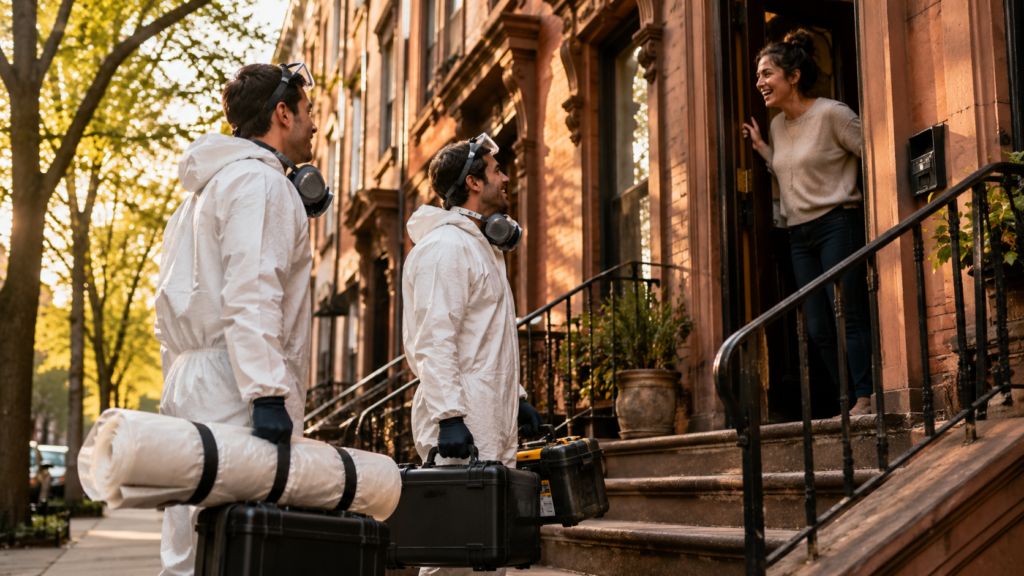
This article was written by a licensed mold inspector and IICRC Building Sciences certified professional at Dry Ease Mold Services, proudly serving all five boroughs of New York City. For a free mold assessment, contact us today.
This article was written by a licensed mold inspector and IICRC Building Sciences certified professional at Dry Ease Mold Services, proudly serving all five boroughs of New York City. Contact us today for a free mold assessment — we respond fast.