
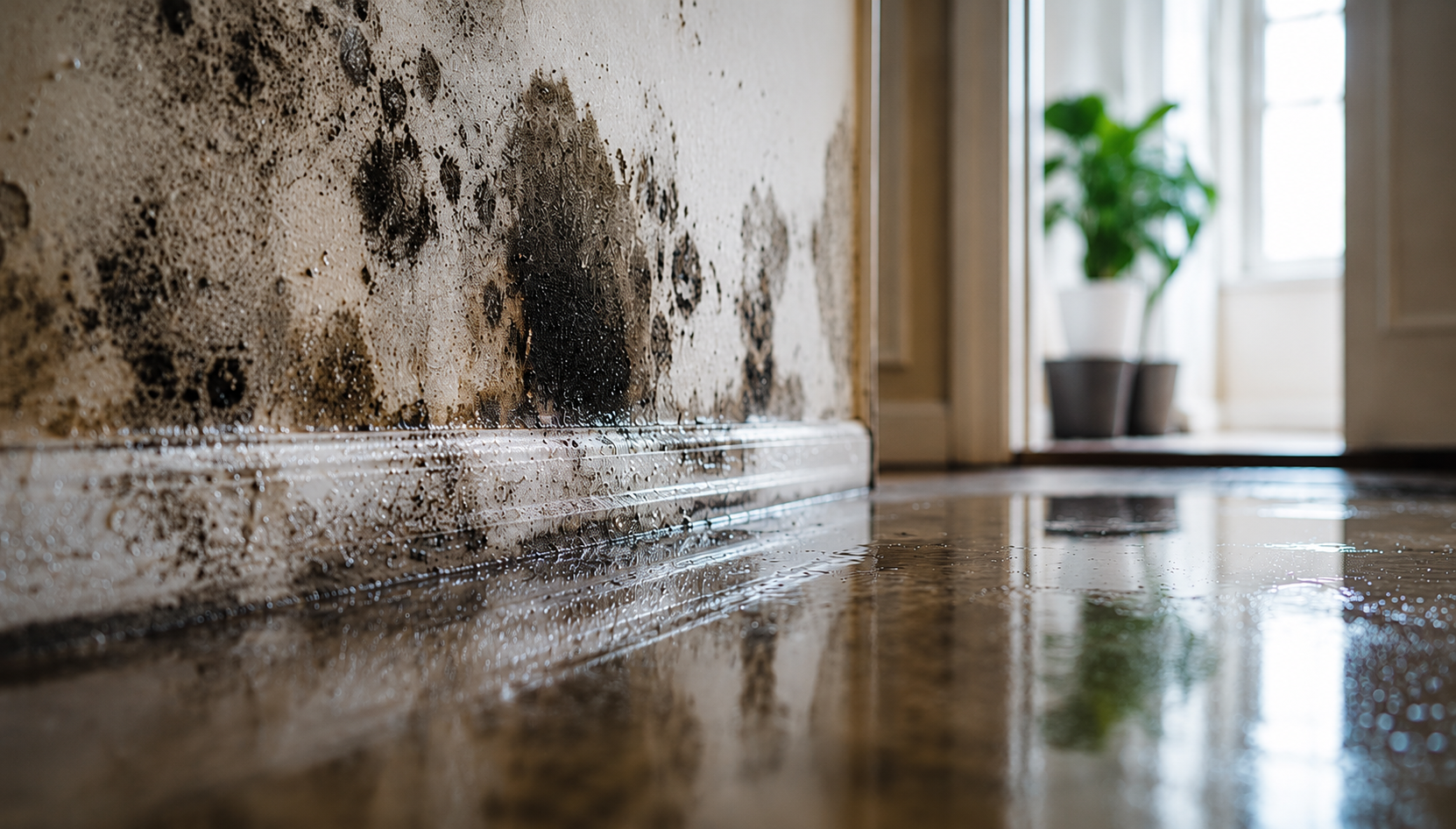
When mold spreads across a large area or poses a health risk, fast action is crucial. Emergency mold remediation stops the moisture source, contains the problem, and initiates the mold removal process to prevent further damage.
For home or business owners in New York, working with an experienced remediation company can make a stressful mold problem easier to manage. The right team can guide you safely and efficiently through every necessary step, from mold inspections, testing, containment, cleanup, and removal to water damage restoration.
Why do emergency mold remediation services matter?
While mold is a natural part of our environment, it poses a risk when its microscopic spores begin to multiply indoors. Once moisture is present, these spores can easily spread throughout a space via air currents, HVAC systems, damp materials, and even foot traffic. For residential properties, it can lead to costly structural damage and create an unhealthy living environment.For commercial properties, mold can disrupt business operations, ruin inventory, and pose serious health and safety risks to employees and customers.
The longer moisture lingers, the greater the risk of mold. After a flooded basement, burst pipe, roof leak, or storm-related water damage, property owners should not wait until the smell gets stronger or the staining spreads. By acting fast and calling in professionals for emergency mold remediation, you can mitigate the damage before it worsens.
Emergency mold remediation focuses on stopping the source of moisture, identifying the extent of the mold infestation, containing the affected area, and removing contaminated materials when needed. Professional mold remediation also helps prevent mold from spreading into clean areas during the mold removal process.
Common situations that call for emergency mold cleanup
Not every small patch of mildew requires a full emergency response. However, certain situations deserve immediate attention.
A large mold problem after water damage should be inspected right away. Mold may spread through drywall, insulation, flooring, baseboards, and stored belongings. A flooded basement is another high-risk situation because moisture can remain trapped in porous materials even after the visible water is gone.
Other urgent situations include:
- Mold growth after fire suppression
- Hidden mold discovered during renovation
- Musty odors after storm damage
- Mold visibly spreading across several rooms
- Water damage from plumbing leaks or appliance failures
- Mold near HVAC equipment or air vents
Why DIY mold removal often falls short
It is tempting to treat mold as a cleaning job, especially when the visible area looks small. However, trying to remove mold yourself can be risky. You might miss hidden mold growth and accidentally spread mold spores if the area isn’t properly contained during the cleanup process.
Likewise, household cleaners may remove surface staining, but they do not always solve the underlying moisture issue. What’s more, scrubbing moldy drywall, pulling up carpet, or opening walls without proper protection can release mold spores into the air. In larger mold remediation projects, this can make the cleanup more difficult and expensive.
By contrast, a professional mold remediation team uses advanced equipment, extensive training, and strict safety protocols to ensure the job is done right. Technicians certified by the Institute of Inspection, Cleaning, and Restoration Certification (IICRC) are experts in containing work areas, removing damaged materials, and thoroughly cleaning surfaces. Their meticulous work supports long-term indoor environmental safety for any property. Whether for a home or a business, a professional-grade service helps protect living spaces, minimizes disruptions, and facilitates a safer return to normal operations.
What should you expect during the mold removal process?
The mold removal process can vary depending on the size of the affected area and the source of the mold. However, most removal projects follow a similar series of steps.
First, the team conducts a thorough property evaluation, which includes mold inspections, moisture readings, visual documentation, and air or surface sampling. This thorough documentation is essential, especially when filing an insurance claim, as it can provide significant support for your case.
Second, technicians address the source of moisture. Because mold will inevitably return if the original water problem isn’t resolved, technicians coordinate plumbing repairs, water extraction, drying, and other necessary restoration services.
Third, containment is set up to keep the work area separate from the rest of the property. For larger commercial jobs, containment planning becomes even more important because building occupants, equipment, inventory, and shared air systems may be involved.
Fourth, contaminated materials are removed or cleaned. The team may employ specialized equipment, including HEPA filtration systems, air scrubbers, and negative air machines. Their process may also involve controlled demolition, antimicrobial treatments, and thorough, detailed cleaning.
Finally, the team performs final checks. The goal is to confirm that the affected area has been cleaned properly and moisture levels have been reduced.
In more severe cases, mold remediation may overlap with broader damage restoration needs. The entire process can include drying, cleanup, water damage restoration, or coordination with reconstruction professionals when damaged materials need to be replaced.
How to prevent mold growth after remediation
Once the mold remediation process is finished, the focus shifts to preventing future growth. You can reduce this risk by controlling moisture, improving ventilation, and responding quickly to water damage.
Make sure to fix plumbing problems as soon as they appear and to dry wet materials after leaks or storms. Also, keep humidity under control in basements, bathrooms, laundry rooms, and storage spaces. Watch for musty odors, condensation, peeling paint, or recurring stains, as these signs may point to hidden moisture.
Routine inspections can help catch small issues before they turn into big, expensive concerns. In particular, regular maintenance around roofs, windows, foundations, and plumbing systems can help stop mold growth in its tracks.
Get fast, expert emergency mold remediation in NY
Mold can spread quickly, but the right response can limit damage and make recovery easier. If you are dealing with mold after water damage, a flooded basement, winter storms, a burst pipe, or an unexplained musty odor, do not wait for the problem to grow.
Dry Ease Mold Removal provides emergency mold remediation and cleanup services for residential and commercial properties in New York, Manhattan, Staten Island, Long Island, and the Tri-State Area.
Have an urgent mold problem? Contact our team now for comprehensive mold removal.