
Short answer: Water damage restoration takes three to five days on most New York jobs, and seven or more when there is sheetrock with insulation behind the wet area. Photograph everything before anything gets moved. Your date of loss is the day the water came in, and reporting it later does not move it.
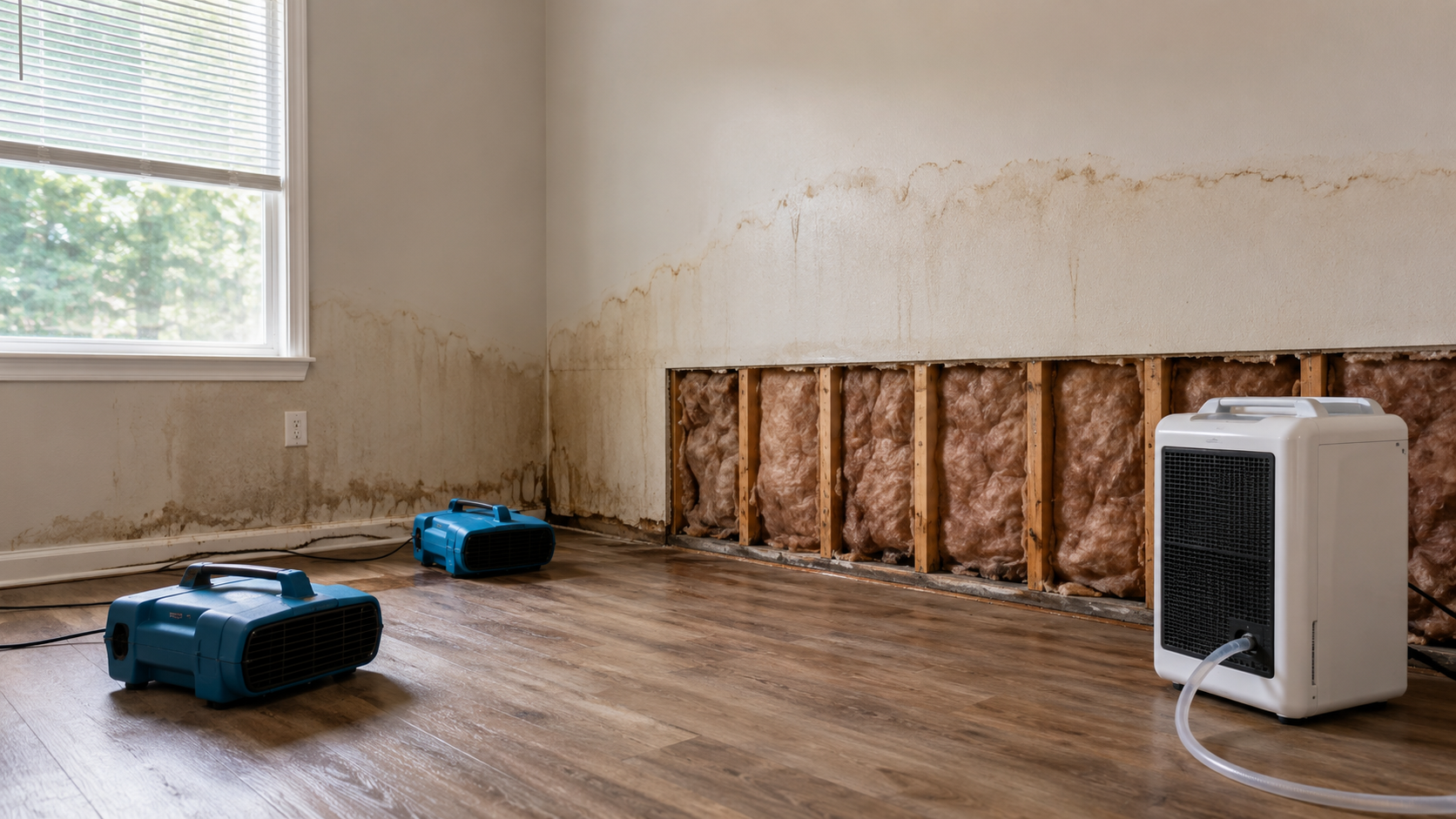
Water damage restoration takes three to five days on most of the jobs I run in New York City. The one that stretched to seven had sheetrock with insulation behind it sitting in the wet zone, and that insulation held water for days after the wall surface read normal. So the honest answer to how long water damage restoration takes is that the number comes off a moisture meter, and a meter does not know what day of the week it is.
Two recent jobs show the spread. In Greenpoint, a couple expecting a baby called about their finished basement after heavy rain overwhelmed the sewer system and pushed water inside. Groundwater took most of it back by the time we arrived, but standing water sat in the low spots and had to be pumped out. There was no door at the top of the basement stairs, so nothing separated that space from the rest of the house.
In Fort Greene, a tenant called about flooring that had discolored and buckled. The water came from a kitchen sink and nobody knew it was running until the floor moved. We moisture mapped the room, photographed everything in case she needed a claim, set the machines, and told her to plan on two to three days before we came back to reassess.
If water is in your home right now, photograph everything before it gets moved. Someone can be on site anywhere in the five boroughs in two to four hours, at any hour. Call 877-215-8399 for a free estimate.
How long does water damage restoration take, stage by stage
Water damage restoration takes three to five days from the first visit to the final moisture reading when there is no wet insulation in the assembly. We can be on site in the five boroughs in two to four hours, day or night. Extraction, moisture mapping and photographs all happen on that first visit, and the equipment goes in before we leave. A typical start is two to three air movers and two dehumidifiers, and we add more if the readings ask for it.
Day two or day three is the first real reassessment. That visit tells us whether the space is trending dry or whether something behind the surface is holding water. The EPA recommends drying water damaged areas and items within 24 to 48 hours to limit mold growth, as of August 2026, which is why the first visit carries more weight than any visit after it. Nothing we do on day four buys back a day lost at the start. That is also why water damage response and structural drying get treated as one job rather than two.
| Stage | How long | What happens |
|---|---|---|
| Call to arrival | Two to four hours, any hour | A technician reaches the property anywhere in the five boroughs |
| Extraction and moisture mapping | First visit | Standing water pumped and extracted, baseline and wet readings taken, photos shot for the claim file |
| Equipment set | Same visit | Two to three air movers and two dehumidifiers to start |
| First reassessment | Day two to day three | Every wet reading compared against the baseline taken on day one |
| Equipment out, clean job | Day three to day five | Wet readings match baseline, machines come out, final numbers recorded |
| Opening the assembly | Day three onward, if readings hold | Baseboards come off first, sheetrock only if the insulation behind it is still wet |
| Wet insulation in a wall | Day seven or longer | Drying continues on exposed material until it reads at baseline |
What dry actually means, in numbers
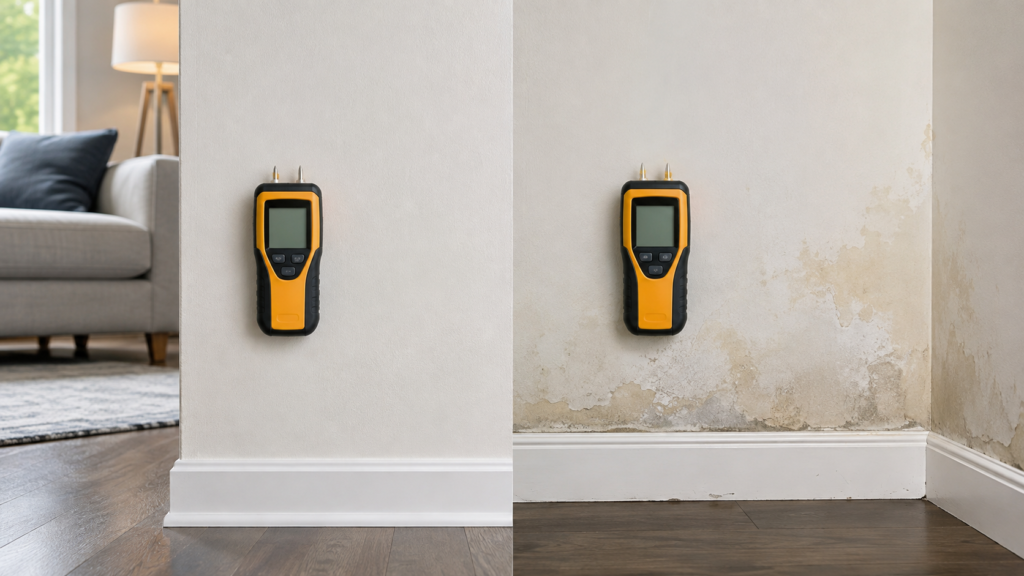
Dry is a number, and the number comes from your own building. Before we dry anything, we take readings on the same material in the same space where we know for certain nothing got wet. That is our baseline. On my jobs it usually lands somewhere around 15 to 20 percent moisture content, and it shifts building to building, which is why a single national target would tell you nothing useful. Two buildings on the same block can sit at different baselines.
Once we have that baseline, every reading in the wet area gets measured against it. Anything sitting above baseline is still wet, whatever it feels like under your hand. The machines stay until the wet readings come down to the number we took off dry material in your building. That is the whole test, and it works the same on sheetrock and on flooring.
So when somebody tells you a wall is dry, ask two things: what the baseline read, and what the wall reads now. Two numbers. If nobody can give you both, nobody has checked.
If the machines are running and nobody has handed you a number, the job is not being managed.
| What you are told | What it actually means | What to ask for |
|---|---|---|
| It is dry to the touch | Surface moisture evaporated, which says nothing about the layer behind it | A meter reading on that spot and on dry material in the same room |
| We took a baseline | Readings from material in your building known to be dry, usually around 15 to 20 percent on my jobs | The baseline number written down before drying starts |
| It is still elevated | The wet material reads above baseline, so it is wet | Equipment stays and readings continue every day |
| The readings match baseline | Dry by the only test that counts | Final readings in writing before the machines leave |
| We took photos on day one | Documentation of the loss, and nothing about drying progress | Dated readings for every day the equipment ran |
What turns a three day job into a seven day job
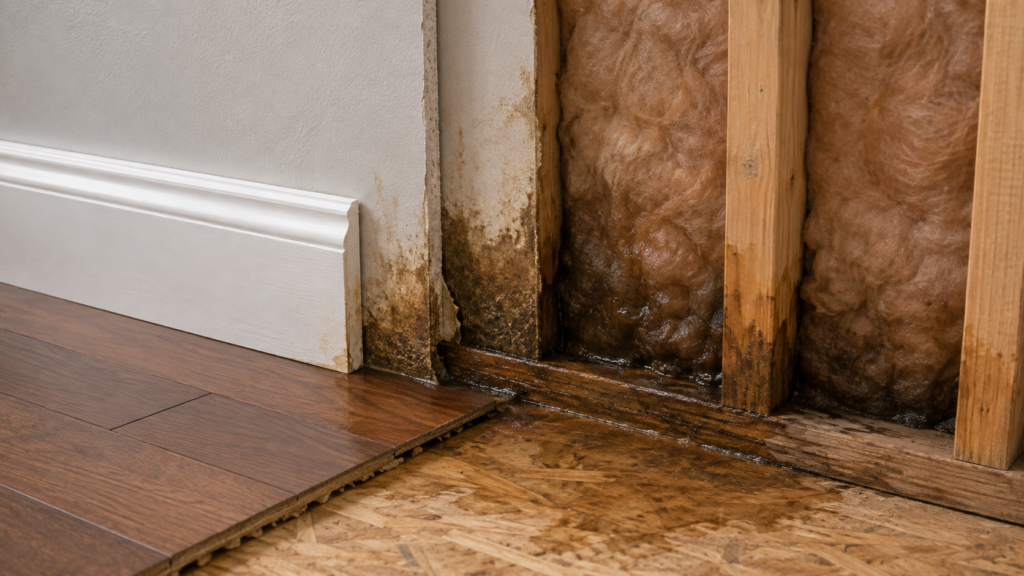
Layers at the base of a wall turn a three day job into a seven day job. Water settles at the floor line, and the floor line is where the assembly is thickest: flooring, then baseboard, then sheetrock, then insulation behind it. Stack three or more layers with no air exchange between them and the moisture has nowhere to travel. Air movers push air across a surface. A surface is all they can reach.
So we open it. If the readings have not come down by day three, the baseboards come off first, because that is the smallest cut that gives the cavity a path out. If the material is still wet a few days after that, I will recommend taking sheetrock off to reach the insulation and the flooring underneath. People do not expect that conversation on a water job. It is the one that decides whether they spend five days or ten.
| What is sitting in the wet area | What it does to the clock |
|---|---|
| Painted sheetrock with nothing behind it | Three to five days. Air movers reach the surface and the surface is the whole problem. |
| Baseboard over sheetrock over insulation at the floor line | Seven days or more. Three layers with no air exchange, so moisture stays where it landed. |
| Insulation in a wall cavity | The most common reason my jobs run long. Sheetrock usually has to come off to reach it. |
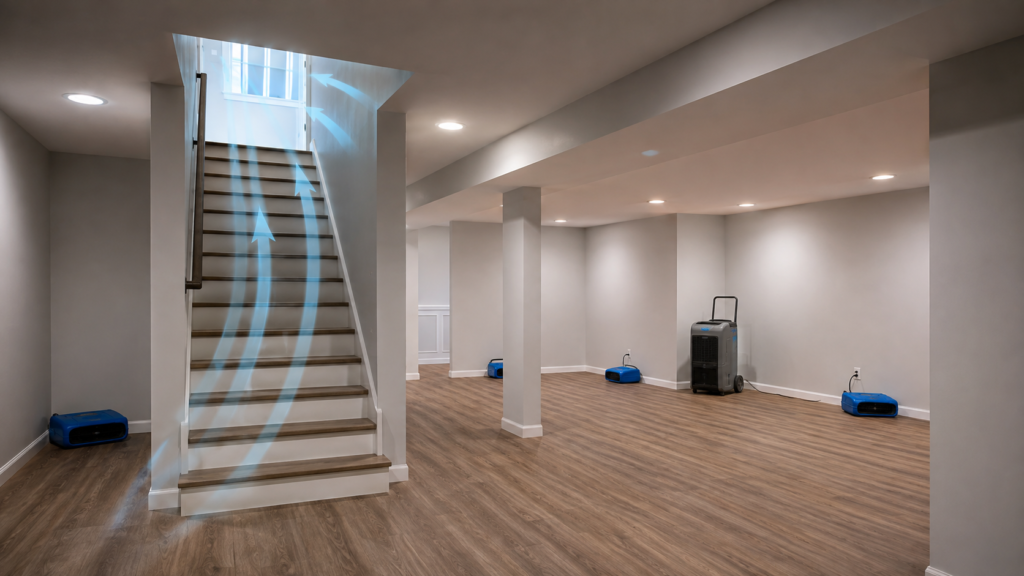
| A finished basement with an open stairwell | Adds days, because the drying has to be complete before the equipment leaves. |
| Water that came up through the sewer | Adds extraction and disposal before drying starts at all. |
| Flooring that has discolored and buckled | Moves the readings under the floor, not just on it, so the subfloor sets the finish date. |
How long does water damage restoration take in a finished basement?
In a finished basement, water damage restoration takes longer than the same volume of water upstairs, because the space is enclosed, the material at the floor line is layered, and the water that reaches a New York basement is often not clean. The Greenpoint job started with rain the sewer system could not carry. Groundwater took most of the water back before we got there, and we pumped and extracted what was left standing before the dehumidifiers went in.
Two things set the schedule on that one. The basement was finished, so the moisture had places to hide. And with no door at the top of the stairs, every hour that space stayed damp it was sharing air with the rest of the house. The couple was expecting a baby, and nobody in that house needed the point explained twice.
CDC guidance is direct on the material side: drywall and insulation contaminated with sewage or floodwater should be removed and discarded rather than dried in place, as of August 2026. A sewer backup and a supply line letting go under a sink are two different jobs, and the schedule reflects that before any drying begins. If you are already past that stage and seeing growth, what to do about mold in a basement is a separate sequence, and water work in Brooklyn runs into basements more than any other room.
When the equipment leaves too early
The most expensive mistake on a water job is equipment that comes out while the material still reads wet. I have walked into homes where another crew set machines, photographed them for the file, and never came back with a meter. On some of those jobs the homeowner was told the material was still wet, and the crew pulled the equipment anyway.
What follows is no longer a water problem. Sheetrock that stays wet loses its integrity. Plywood and engineered flooring delaminate, meaning the glued layers separate and the board never sits flat again. A wall cavity that stayed damp for a week becomes a mold job, with a different scope, a different price and a different license behind it, and mold remediation runs on its own timeline once you are there.
I push on this harder than most crews do, and some clients find it annoying by day four. I would rather be annoying on day four than come back in six weeks to open a wall we already dried.
When the insurance clock starts
Your date of loss is the day the water came in. That is the date the carrier works from, and it does not shift because you reported it three days later or a week later. What shifts is how hard you have to work to prove it, and documentation does that work.
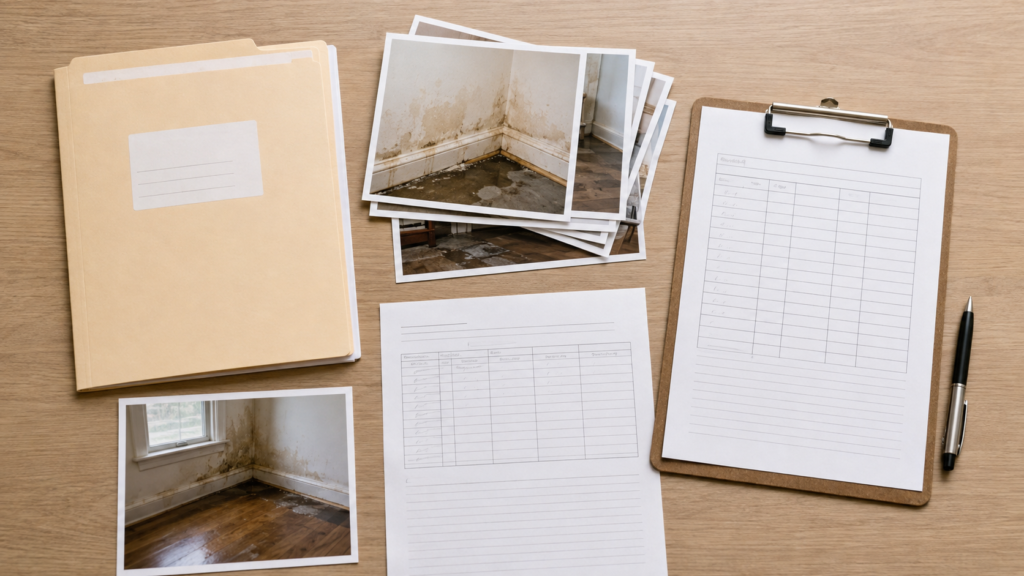
So during the drying days, photograph the wet area before anything gets moved, then photograph it again each day. Keep the moisture readings. Keep the equipment count and the number of days each machine ran. Carriers handle a lot of claims at once, and a file that arrives organized moves differently from one that arrives as a phone call. If you are not sure whether you have a loss yet, the early warning signs of water damage are worth photographing on the day you notice them.
I am not an adjuster and I do not decide what gets paid. I can tell you which files come back with questions, and it is the ones with no dated readings in them.
Questions I get on water jobs
How long does water damage restoration take before mold becomes a risk?
The EPA recommends drying water damaged areas and items within 24 to 48 hours to limit mold growth, as of August 2026. That window is why the first visit matters most. The mitigation itself still runs three to five days on a clean job, and longer wherever insulation is involved.
How fast can someone get to my building in the five boroughs?
Two to four hours, at any hour. Dry Ease runs 24/7 across the five boroughs, and the first visit covers extraction, moisture mapping, photographs and equipment setup in one trip. Call 877-215-8399.
Does my date of loss change if I report the leak a week later?
No. The date of loss is the day the water came in. Reporting late does not move it, though it does put more weight on your documentation, so keep photos, dates and moisture readings from the day you noticed the water.
Do the baseboards have to come off?
Only if the readings stay above baseline. When material has not come down by day three, baseboards come off first, because that is the smallest cut that gives the wall cavity a path to dry. Sheetrock comes off only if the insulation behind it is still holding water.
Is a basement sewer backup handled like a burst pipe?
No. Standing water gets pumped and extracted first, and CDC guidance says drywall and insulation contaminated with sewage or floodwater should be removed rather than dried in place. That adds work before drying starts, so the schedule runs longer than a clean water loss of the same size.
Who you’re getting this from
Dry Ease Mold Removal has handled water damage in New York City since 2003, across more than 10,000 jobs, with IICRC-certified technicians in Water Damage Restoration and Applied Microbial Remediation. New York licenses mold remediation and Dry Ease holds that license (26-6AXK6-SHMO), which matters on a water job because water that sits long enough stops being a water job. I am the one on site. The license belongs to the company.
If the machines are running in your home and nobody has shown you a moisture reading, ask for one in writing before the equipment leaves. Dry Ease works across all five boroughs, plus Westchester County, Nassau County, Rockland County and New Jersey. Call 877-215-8399 for a free quote.