
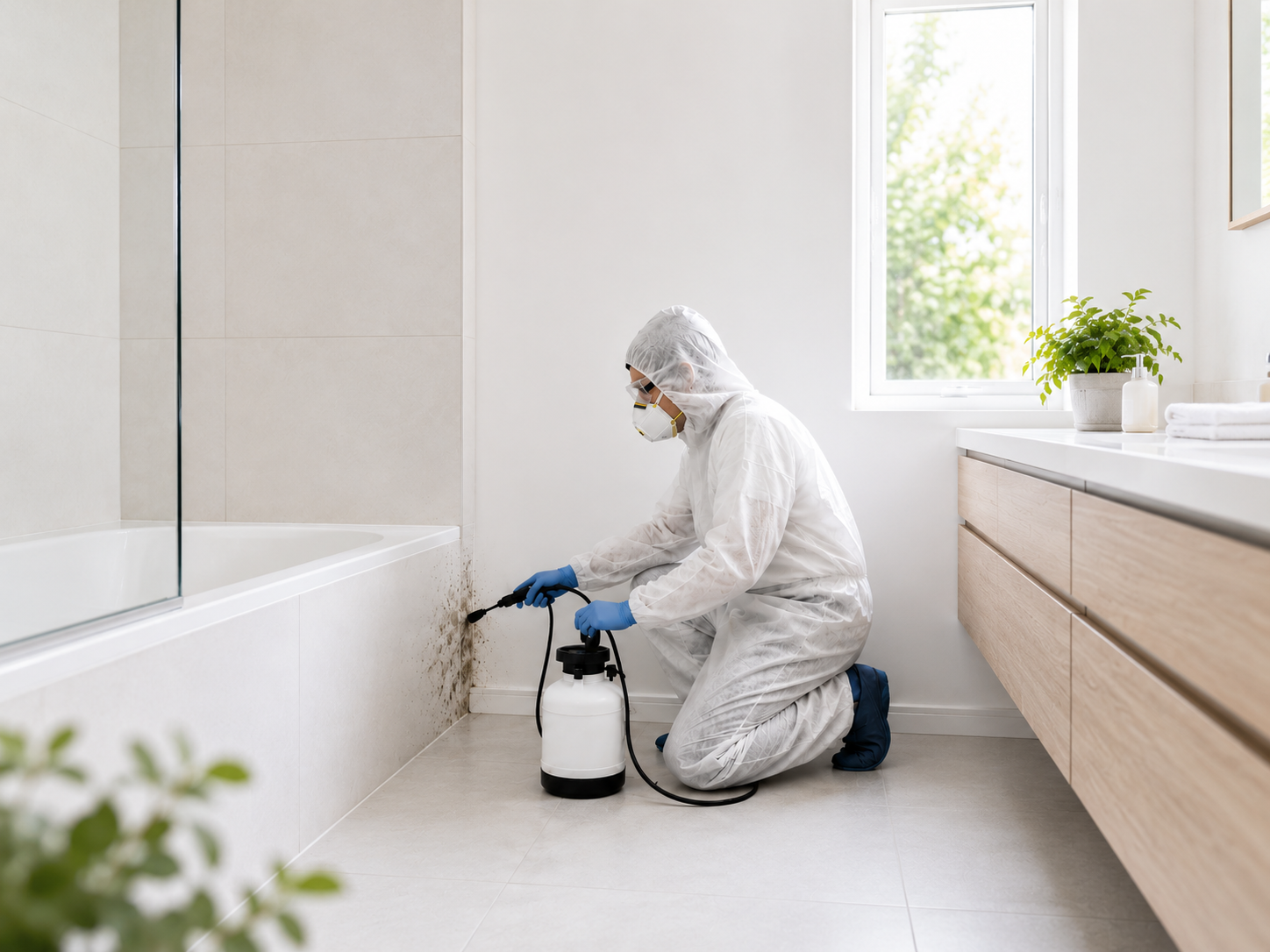
Finding mold in your house is unsettling, especially when you’re unsure of its extent or how long it’s been there. It can appear under carpets, around windows, on bathroom walls, or near plumbing leaks. Sometimes, a recurring musty smell is the only warning sign.
Treating mold depends on the size of the area, the type of surface, and the underlying moisture problem. While you can clean small spots with the right precautions, larger or recurring issues typically require professional remediation.
Here’s what you should know before deciding whether to tackle mold yourself or call a pro.
Why does mold growth happen?
Mold is a type of fungus that thrives in moist environments, growing on wood, fabric, food, and other organic materials. Mold spores exist naturally in the environment and can enter your home through doors, windows, clothing, pets, and your heating, ventilation, and air conditioning (HVAC) systems. Once mold spores land on damp materials, they can begin to grow.
Common causes of mold growth include:
- Flood damage and/or standing water
- Roof leaks that allow water into the attic or ceiling space
- Plumbing leaks under sinks or behind walls
- Wet materials that stay damp for a long time
- Moist air from cooking, showers, or poor ventilation
- High humidity in the bathroom, kitchen, or basement
- Condensation around windows, ducts, or ceiling tiles
Essentially, any area in your home with excess moisture or water damage is a potential breeding ground for mold. Understanding how mold spreads and thrives is the first step toward preventing growth and keeping your home safe.
Does mold spread fast?
Yes, mold can become a problem quickly. If an area remains wet, mold can grow and spread to nearby surfaces. Airborne spores can also settle on damp materials such as walls, carpet, and furniture, allowing the mold to continue growing.
That is why it is important to act fast after a leak, flood, or water damage event. Drying wet materials, opening windows when outdoor conditions allow, bringing in fresh air, and reducing humidity can help slow the spread. However, fresh air alone will not remove existing mold.
If you clean visible mold but ignore the moisture source, the remaining mold or spores may still find opportunities to take root. Effective mold cleanup requires removing moldy materials, drying the affected area, and fixing the moisture problem that caused the growth.
When DIY mold treatment may be enough
Small mold problems on hard surfaces may be safe to clean yourself if you use the right protective equipment. This usually applies to mold on tile, glass, sealed countertops, metal fixtures, or other non-porous surfaces.
Before coming in contact with the mold, put on rubber gloves, eye protection, and a mask. Keep children, pets, and anyone with asthma, allergies, or a weakened immune system away from the work area. Mold exposure can trigger allergic reactions, breathing problems, and irritation, especially for people who are sensitive to mold. Worse, it can even cause severe health problems to those living with compromised immune systems.
For small areas, you can usually clean moldy surfaces with soap and clean water. Some homeowners also use vinegar or hydrogen peroxide on hard surfaces. Products from hardware stores may also help, but always follow the label directions.
If you use bleach, be careful. Never mix bleach with ammonia, vinegar, or other cleaning products. Mixing bleach with acids and certain cleaning products can create dangerous fumes. Bleach may help clean some hard surfaces, but it is not always the best choice for porous materials such as drywall, insulation, carpet, or ceiling tiles.
Always dry the surface after cleaning and monitor it for any new growth over the next few days. If new growth appears, it’s a sign that the underlying issue hasn’t been fully resolved, and you may need to bring in mold removal experts.
Signs you should call a mold remediation professional
DIY mold treatment has limits. A small spot on bathroom walls is very different from mold spreading behind drywall, under flooring, or through the HVAC system.
It’s time to call in a professional for mold remediation when:
- The mold has spread across a surface area larger than three meters.
- Despite your cleaning efforts, the mold returns.
- A persistent musty odor is present, but its origin is unclear.
- You notice mold growth following significant water damage or a flood.
- Materials such as insulation, carpeting, or ceiling tiles show signs of mold.
- You believe mold might be hidden within walls, air ducts, or crawl spaces.
- A household member is experiencing severe allergic symptoms.
- The humidity levels in your home are consistently high and difficult to manage.
- You still suspect that there is mold somewhere in your house.
Professional mold management experts can inspect the house, locate hidden moisture, contain the work area, remove contaminated materials, clean hard surfaces, and help improve indoor air quality. They can also use equipment to dry damp areas and reduce the risk of airborne mold spores spreading during cleanup.
What does the mold remediation process involve?
The mold remediation process usually starts with an inspection. A professional inspector will search for visible signs of mold, leaks, moisture, and water damage. They may also investigate areas for possible hidden mold growth, such as bathrooms, attics, basements, crawl spaces, roof areas, and the HVAC system.
Once mold is discovered, the team immediately works to contain it, preventing the spores from spreading. They may use plastic sheeting, air filtration equipment, and controlled airflow devices. Moldy materials that cannot be cleaned are removed for proper disposal. Hard surfaces are cleaned, dried, and treated using professional methods.
After removing all visible mold and contaminated materials, the next crucial step is to completely dry the affected area.
Lastly, it’s essential to eliminate the source of moisture to create a safe, healthy indoor environment. This may involve:
- Repairing any plumbing leaks
- Reducing indoor humidity levels
- Improving ventilation in damp areas
- Fixing any water intrusion from the roof or outside walls
Can a moldy house be saved?
In many cases, yes, a moldy house can be saved. The key is acting quickly and using the right cleanup method. A small mold problem may only require cleaning, drying, and better ventilation. A larger problem, on the other hand, may necessitate removing damaged materials, repairing leaks, and completing professional mold remediation.
Severe mold growth can feel overwhelming, but it does not automatically mean the house is beyond repair. Professionals handle mold in homes, rental properties, and commercial buildings regularly.
Does mold ever go away?
Unfortunately, no. While it might dry out and appear inactive, the spores are still there, just waiting for moisture to return so they can start growing again.
It’s important to remember that a “mold-free” home isn’t entirely free of mold spores, as mold is a natural part of our indoor and outdoor environment. The goal isn’t to kill mold and eliminate every single spore, but to prevent them from finding a damp place in your home to multiply. The key to this is managing moisture, humidity, and any water damage effectively.
How to prevent your mold problem from coming back
Once you’ve removed moldy items or surfaces, your next priority is prevention. Mold thrives on moisture, so always keep your home dry and well-ventilated.
Don’t let any water-related issues, no matter how small they seem, go unaddressed, as these can quietly increase your risk of significant mold growth. Fix plumbing leaks as soon as you find them, check the roof for damage after storms, and dry any wet materials or flood-damaged areas immediately.
Improving your home’s airflow is also crucial. Regularly use exhaust fans in the bathroom and kitchen, and open windows to let fresh air circulate when the weather permits. Certain persistently damp areas, such as basements, may need dehumidifiers for effective humidity control. Don’t forget to regularly clean your HVAC system to ensure it’s not circulating mold spores.
Finally, a few small adjustments can make a big difference. Try to keep furniture slightly away from damp walls to improve air circulation, and watch for condensation on windows, which can be a sign of high humidity. These simple habits can go a long way in preventing mold from returning.
Get rid of mold the right way with NYC’s mold experts
Learning how to treat mold in your house starts with understanding the size of the problem. If the mold is small, limited to hard surfaces, and caused by a moisture issue that has already been fixed, DIY cleaning may be enough. With the right protective equipment, careful cleaning, and proper drying, you may be able to handle minor moldy surfaces yourself.
However, if the mold keeps returning, spreads across porous materials, follows water damage, or creates a musty smell throughout your house, it is time to call a professional. Mold remediation helps address the visible growth, hidden moisture, and indoor air quality concerns that DIY cleaning may miss. Mold exposure can trigger a range of health problems.
Dry Ease Mold Removal Services provides mold inspection, mold estimates, and mold remediation to help you get rid of mold and protect your home from future growth. If you have mold problems or have questions about mold removal, contact us today.