
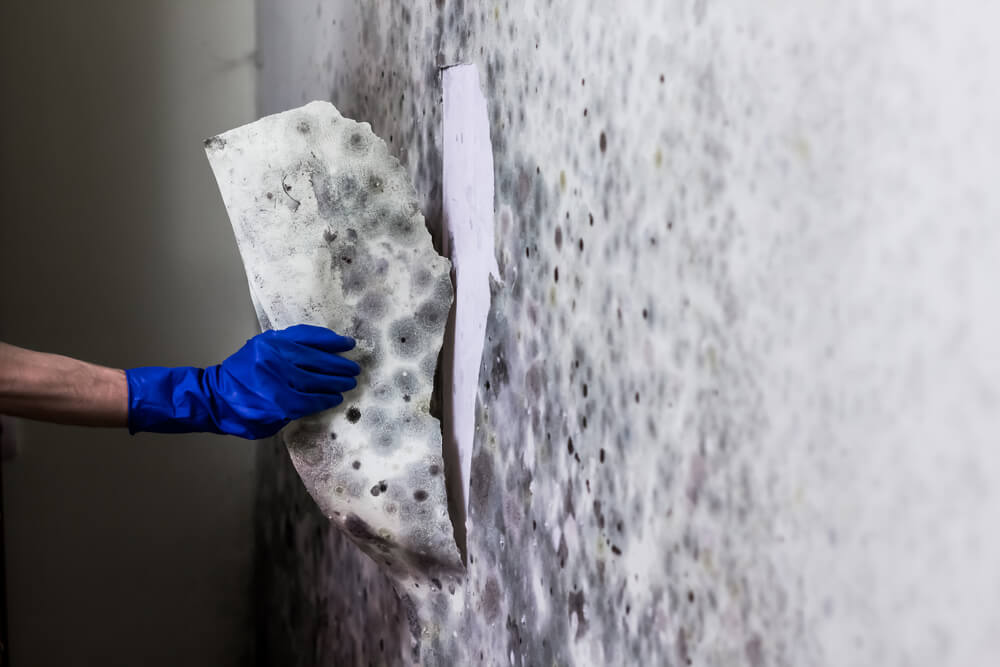
If you have mold in your apartment, one of the first questions you may ask is: Can I stay here while the mold remediation is being done?
The honest answer is: it depends.
In some New York City apartments, residents may be able to stay in the apartment if the mold-affected area is small, isolated, and properly contained. In other cases, especially in smaller apartments, one-bedroom units, basement apartments, or homes with children, elderly residents, asthma, allergies, or immune conditions, it is usually better to leave during the remediation work.
At Dry Ease Mold Removal, we help homeowners, tenants, landlords, and property managers throughout Manhattan, Brooklyn, Queens, the Bronx, Staten Island, Westchester, and Nassau County determine whether it is safe to remain in the apartment during mold remediation.
Quick Answer: Should You Stay or Leave During Mold Remediation?
The most important rule is simple: you should not be inside the apartment during active mold remediation work.
That means you should not be present while workers are removing moldy sheetrock, opening walls, treating contaminated building materials, HEPA vacuuming, or disturbing mold-damaged surfaces.
However, depending on the layout of the apartment, the size of the mold area, and whether the work zone can be contained, some residents may be able to return after work stops for the day or sleep in a separate clean area.
Why NYC Apartments Are Different
Mold remediation in New York City apartments can be more complicated than in larger homes. Many apartments are small, tightly built, and have limited ventilation. A studio or one-bedroom apartment may not have enough space to safely separate the work area from the living space.
NYC apartments also often have shared walls, compact bathrooms, older plumbing, limited window access, and building management requirements. If mold remediation is happening in the bathroom, kitchen, bedroom, or main hallway, the resident may not have a clean and separate area to stay in.
This is why Dry Ease Mold Removal often recommends that residents leave during the active remediation process, especially in small apartments.
How Apartment Size Affects Whether You Can Stay
The square footage of the mold in relation to the square footage of the room and apartment matters. A small mold issue in a large apartment may be easier to isolate. A similar mold issue in a small one-bedroom apartment may affect the entire living space.
When You May Be Able to Stay in the Apartment
You may be able to stay in the apartment if the mold problem is small, isolated, and located away from the main living space.
Staying may be possible when:
- The affected area is limited in size
- The mold is in one contained room
- The apartment is large enough to separate living areas
- The work zone can be sealed off
- Air filtration or negative air equipment can be used
- There is another clean section of the apartment
- There is no sewage contamination
- There is no heavy demolition
- No sensitive occupants are living there
For example, if mold remediation is taking place in a back storage room or isolated section of a larger apartment, the resident may be able to stay in another area. But this depends on containment, air movement, and the scope of work.
When You Should Leave the Apartment
In many cases, it is safer and more practical to leave during mold remediation.
You should strongly consider leaving if:
- The apartment is small
- It is a studio or one-bedroom apartment
- Mold is in the bedroom, bathroom, kitchen, or main living area
- Sheetrock or flooring must be removed
- There is heavy water damage
- The source was flooding or sewage
- The unit is a basement apartment
- There is a strong mold or musty odor
- The HVAC system may be affected
- The work area cannot be fully isolated
- Children, elderly residents, or sensitive individuals live there
Who Should Not Stay During Mold Remediation?
Some people are more sensitive to mold, dust, demolition, odors, and poor indoor air conditions. These individuals should not be inside the apartment during active mold remediation.
Can You Sleep in the Apartment During Mold Remediation?
Sometimes, yes — but not always.
If the mold remediation area is fully contained and the bedroom or sleeping area is clean, separate, and away from the work zone, sleeping in the apartment may be possible.
However, in small NYC apartments, this is often difficult. In a studio or one-bedroom apartment, the affected area may be too close to the sleeping area, kitchen, bathroom, or main living space.
A simple rule is:
If there is any doubt, leave the apartment until the remediation is complete.
What Makes an Apartment Unsafe During Mold Remediation?
Several conditions can make it unsafe or uncomfortable to stay in the apartment.
Heavy Water Damage
When building materials are wet, mold can spread behind walls, under floors, and into hidden cavities. Heavy water damage often requires demolition, drying equipment, dehumidifiers, and removal of affected materials.
Sewage or Contaminated Water
If the water source involves sewage, toilet backup, contaminated floodwater, or black water, residents should not stay in the affected apartment. This is more than a mold issue. It can involve contaminated building materials and unsafe conditions.
Basement Apartments
Basement apartments are more vulnerable to flooding, poor ventilation, humidity, and hidden moisture. If mold remediation is happening in a basement unit, it may be harder to create safe separation.
Large Mold Growth
The larger the mold-affected area, the more likely it is that demolition, containment, air filtration, and professional drying will be needed.
Poor Ventilation
If the apartment does not have good airflow or a clean area away from the work zone, staying inside may not be practical.
What Happens During Professional Mold Remediation?
A professional mold remediation project may include several steps depending on the condition of the apartment.
Dry Ease Mold Removal may perform:
- Mold assessment
- Moisture inspection
- Containment setup
- Protection of unaffected areas
- Negative air filtration
- HEPA vacuuming
- Removal of mold-damaged sheetrock or materials
- Cleaning and surface treatment
- Water damage drying
- Dehumidifier setup
- Disposal of contaminated materials
- Final cleaning
- Documentation for landlords, property managers, or insurance claims
The goal is not only to remove visible mold. The goal is to correct the moisture issue, remove affected materials safely, control dust and spores, and help prevent the mold from returning.
Why Containment Matters
Containment is one of the most important parts of mold remediation.
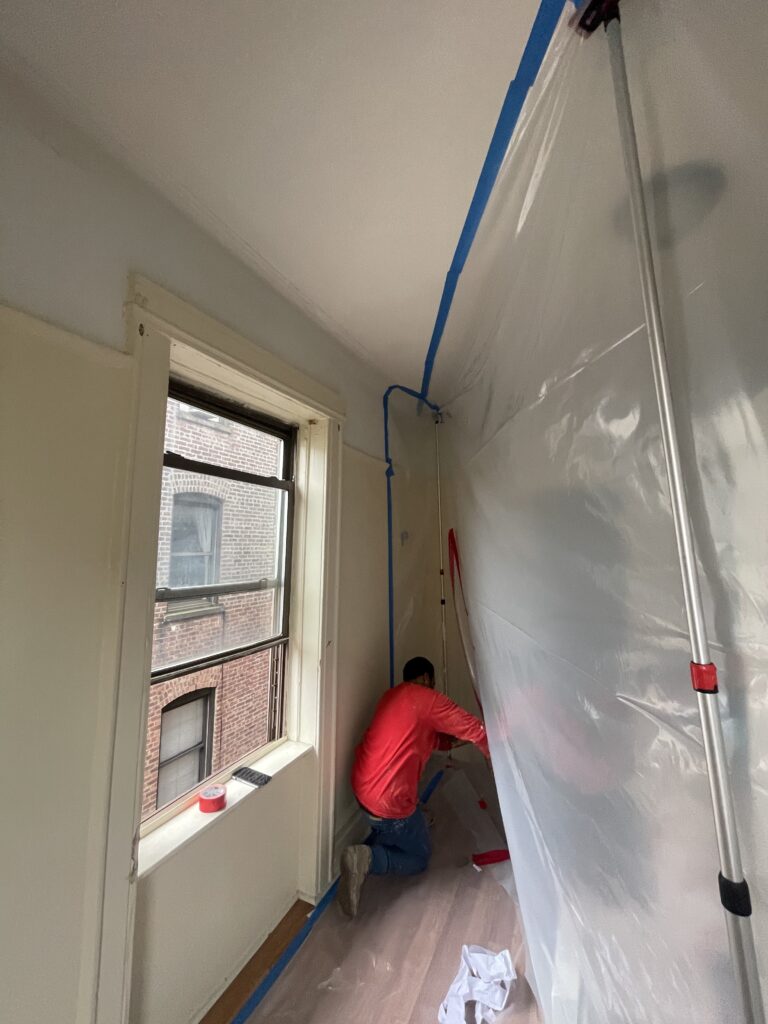
The purpose of containment is to separate the work area from clean areas of the apartment. This helps reduce the chance of dust, debris, and mold particles spreading into rooms that were not originally affected.
Containment may include:
- Plastic sheeting
- Sealed entry points
- Zip-wall barriers
- Negative air machines
- HEPA air filtration
- Controlled work practices
- Proper disposal of affected materials
Without containment, mold remediation can become messy and unsafe. Moldy dust can spread into clean areas and make the problem worse.
How Long Should You Stay Out of the Apartment?
The timeline depends on the size of the mold problem, the amount of water damage, and whether building materials need to be removed and dried.
What Tenants, Landlords, and Property Managers Should Do
Mold remediation affects everyone involved in the property. Tenants need safe living conditions. Landlords and property managers need proper documentation, access coordination, and a professional remediation process.
When to Call Dry Ease Mold Removal
You should call Dry Ease Mold Removal if you notice:
- Visible mold
- Musty odors
- Water stains
- Wet sheetrock
- Soft or swollen walls
- Recent flooding
- Sewage backup
- Moisture after a plumbing leak
- Mold around windows, bathrooms, or HVAC systems
- Mold returning after cleaning
Mold problems are usually connected to moisture. If the moisture source is not corrected, the mold can come back.
Dry Ease Mold Removal provides mold remediation, water damage drying, flood cleanup, and emergency services throughout Manhattan, Brooklyn, Queens, the Bronx, Staten Island, Westchester, and Nassau County.
FAQs
Can I sleep in my apartment during mold remediation?
Sometimes, but only if the mold remediation area is fully contained and the sleeping area is separate from the work zone. In small NYC apartments, especially studios and one-bedroom units, it is often better not to sleep there until the work is complete.
Is mold remediation dangerous?
Professional mold remediation is designed to control the work area and reduce risk. However, the process can involve demolition, dust, contaminated materials, cleaning, and air filtration equipment. Residents should not be inside the apartment during active remediation.
How long does mold remediation take?
Small projects may take one day. Larger projects involving water damage, sheetrock removal, flooring, sewage, or basement contamination may take several days. Drying can also add time depending on moisture levels.
Should children or elderly residents stay during mold remediation?
No. Children and elderly residents should avoid the apartment during active mold remediation, especially if the apartment is small or the work area cannot be fully separated.
What if I have asthma or allergies?
If you have asthma, allergies, immune issues, COPD, or another respiratory condition, you should not be in the apartment during remediation. You may also need to avoid the apartment until the work is complete and the space has been cleaned.
Can my landlord make me stay during mold remediation?
This depends on the condition of the apartment, the scope of work, the lease, and whether the apartment can be safely occupied. If the apartment is small, heavily affected, or not usable during remediation, the situation should be documented and discussed with the landlord, property manager, or appropriate housing professional.
Final Answer: Can You Stay in Your NYC Apartment During Mold Remediation?
Sometimes — but you should not be there during the active work.
If the mold is small, isolated, and properly contained, and the apartment is large enough to safely separate the living space from the work area, staying may be possible. But if the apartment is small, the mold is widespread, there is heavy water damage, sewage, poor ventilation, or sensitive occupants, it is usually safer to leave until the remediation is complete.
For fast help with mold remediation, flood cleanup, and water damage drying in NYC, Westchester, or Nassau County, contact Dry Ease Mold Removal today.