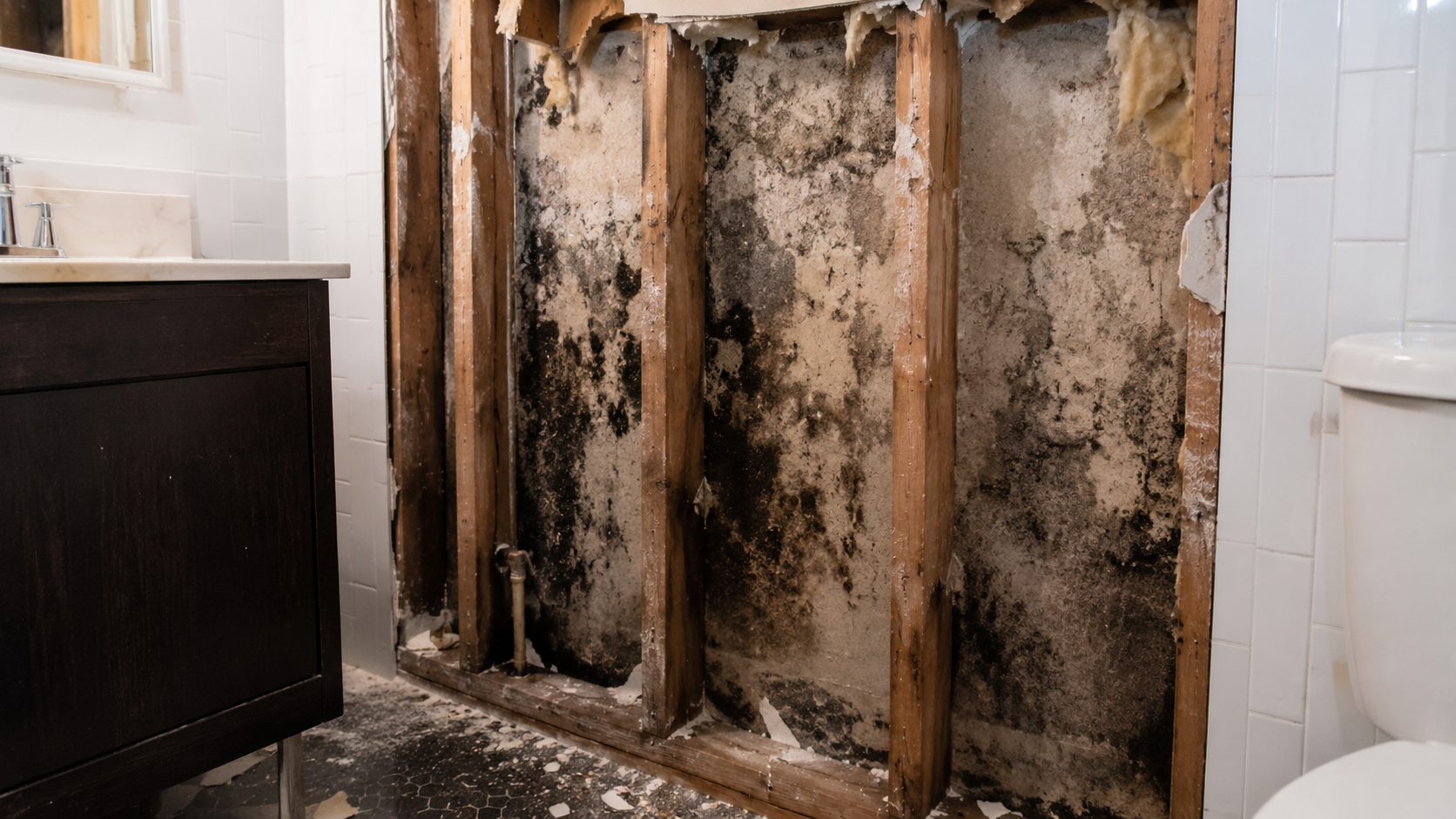
Written from the field by Dry Ease Mold Removal, a NY State licensed Mold Remediation Contractor (License #26-6AXK6-SHMO, exp. 5/31/2028) serving the five boroughs, Westchester, Nassau County, and North Jersey for 20 years. Our technicians hold IICRC certifications in Applied Microbial Remediation (AMRT) and Water Damage Restoration (WRT). You can verify any NY mold contractor’s license through the state’s Licensed Mold Contractors Search Tool before hiring.
The Short Answer
Most mold remediation jobs take one to ten days, and job size is what moves that number more than anything else. A bathroom or closet with a contained problem usually wraps up in one to three days. A kitchen, bedroom, or section of a basement runs two to four days. A full apartment or anything spanning multiple rooms can take two to ten days, and that wide range isn’t padding: it depends on the building material, how easy the space is to access, and whether there’s still an active leak feeding the problem.
That’s the short version. The full answer, especially in New York City, has more moving parts: what’s behind your walls, whether your building requires board approval before anyone can start, and whether the moisture source has actually been fixed. Below is the full breakdown, along with real jobs from our own files.
Average Timelines by Job Size
Every estimate starts with the size of the affected area. Here’s how that typically breaks down:
| Job Size | Example | Typical Duration | What’s Usually Involved |
|---|---|---|---|
| Small | Bathroom, single closet, under 10 sq. ft. | 1–3 days | Containment, removal, drying, clearance testing |
| Medium | Kitchen, bedroom, part of a basement | 2–4 days | Containment, removal, structural drying, clearance testing |
| Large | Full apartment, whole basement, multiple rooms | 2–10 days | Containment, removal, drying, possible plumbing coordination, clearance testing, often reconstruction |
Small Jobs (1 to 3 Days)
Small jobs are contained to a single room or less: a bathroom, a closet, a small section of drywall. Under New York’s Article 32, a mold problem under 10 square feet technically falls outside the state’s formal project and licensing rules, though we follow the same containment and safety practices regardless of size. Containment alone typically takes two to four hours to set up before removal starts. Most small jobs finish in one to three days, assuming the moisture source is already resolved.
Medium Jobs (2 to 4 Days)
A kitchen, a bedroom, or part of a basement usually falls into this range. There’s more material to remove and more surface area to dry, but the scope is still contained enough that we’re rarely opening up multiple rooms at once. Two to four days is typical here, again assuming there isn’t an active leak still feeding the problem.
Large and Complex Jobs (2 to 10 Days)
This is where the range gets wide, on purpose. A full apartment, a flooded basement, or mold spread across multiple rooms depends on the building’s construction, how easy the space is to access, and whether the water source has actually been shut off. We’ve closed large jobs in two days, and we’ve had others run past a week once we opened the walls and found a leak that was still active. Commercial spaces generally fall into this same range, though scheduling around business hours and building engineering staff can add delays on top of the physical work.
The Remediation Process, Step by Step
Every job moves through the same core stages. How long each one takes depends on the size and complexity of the space.
Inspection and Assessment
New York State law treats mold assessment and mold remediation as two separate, independently licensed roles. The same company generally can’t write the remediation plan and then clear its own work. In practice, a documented assessment and written scope of work needs to be in place before removal starts, arranged by the property owner or an independent assessor. This step can take anywhere from a same-day visit to a few days, depending on how quickly an assessor can get on site.
Containment
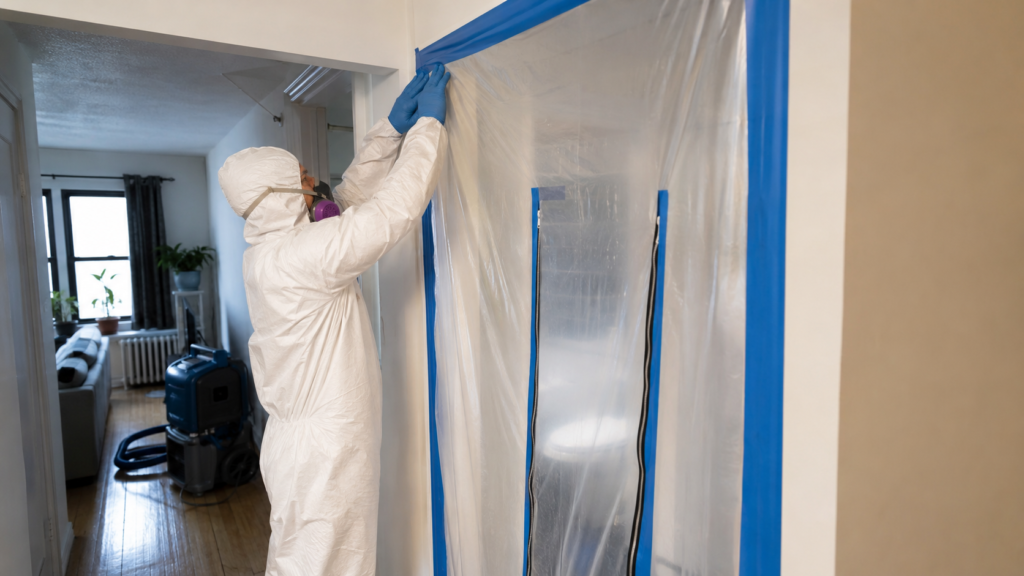
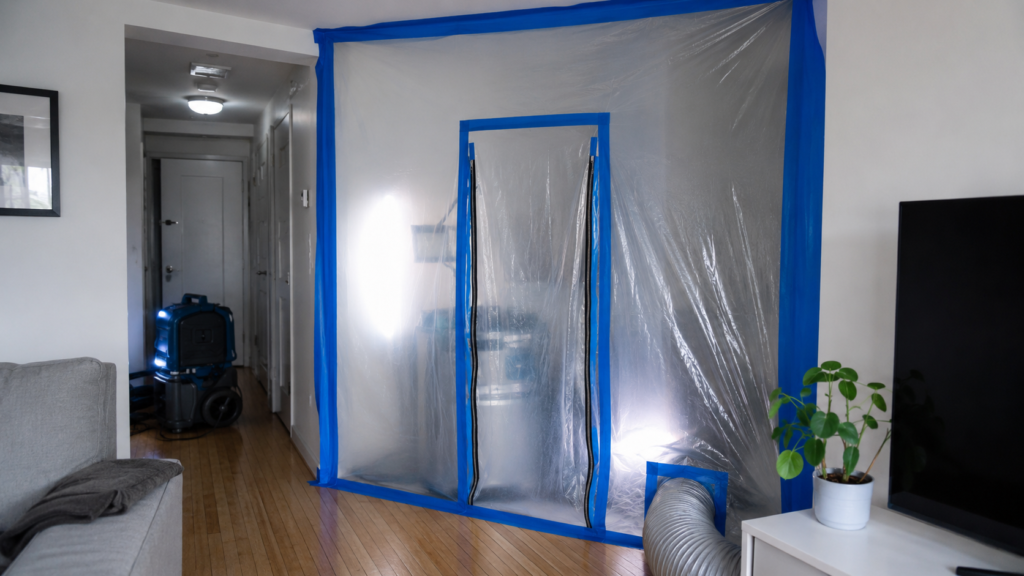
Before any removal begins, we seal off the work area with plastic sheeting and negative air pressure to keep spores and dust from spreading into the rest of the home. For a small or medium job, this takes about two to four hours, and it’s not a step we rush: cross-contamination is exactly what containment exists to prevent.
Remediation and Removal
This is the actual demolition and cleaning stage: removing affected material (drywall, insulation, flooring, whatever the mold has gotten into), HEPA vacuuming, and treating the remaining structure. Job size drives most of this timeline, and it’s also where surprises tend to show up once we’re actually inside the wall.
Structural Drying
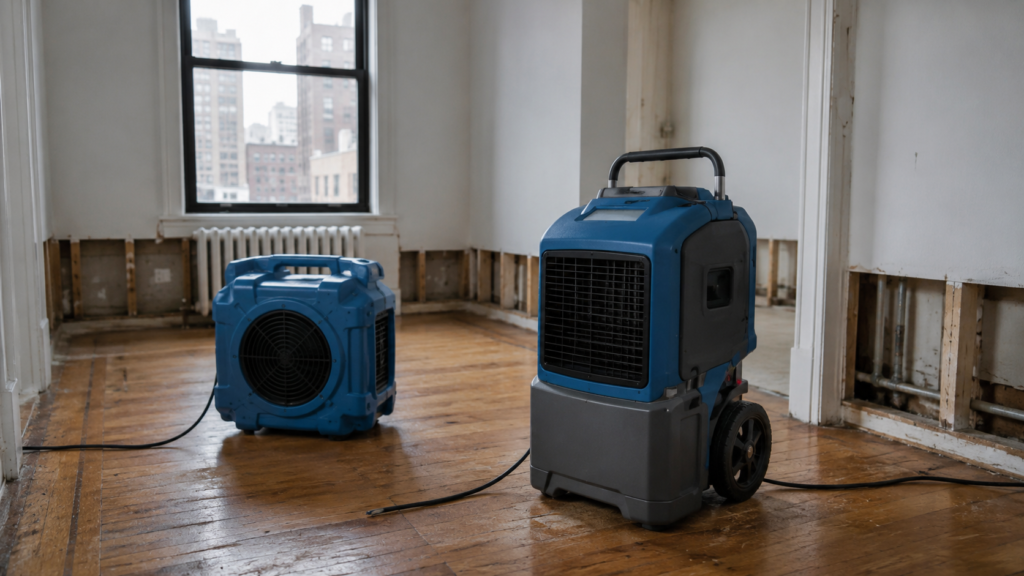
Once the affected material is out, the space needs to dry completely before anything gets closed back up. Structural drying with air movers and dehumidifiers typically runs two to three days, and this step often overlaps with the tail end of remediation rather than starting fresh afterward.
Clearance Testing
After remediation, an independent assessor returns to test the air and surfaces and confirm the space is clear. Lab turnaround on those samples typically runs 24 to 48 hours. This step doesn’t get skipped or rushed. It’s what confirms the job actually worked, and it’s usually the documentation you need to show the work was completed correctly.
Reconstruction
If drywall, flooring, or cabinetry had to come out, putting it back is its own project, often scheduled and quoted separately from the remediation itself. A drywall patch might take a day or two. A full room rebuild can take a couple of weeks. This is the step most likely to get lumped into “remediation” in people’s minds, even though it’s really a separate phase with its own timeline.
What Actually Determines Your Timeline
Building Materials and Building Age
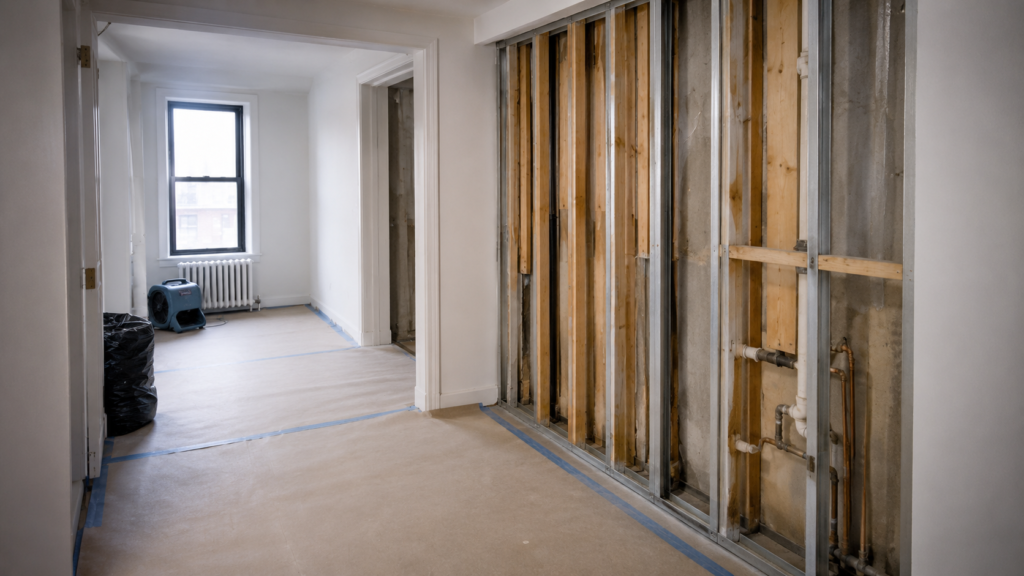
This is the single biggest variable we run into, especially in prewar buildings across the city. Older buildings often have multiple layers of plaster, sometimes over a mix of metal lath and wood lath, and we don’t always know what’s underneath until we open it up. Sometimes there’s sheetrock hiding behind the plaster from a previous renovation, sometimes installed directly over lead-based paint, which adds a different layer of material, and a different set of safety protocols, that wasn’t part of the original scope. None of this shows up in a visual inspection, only once we start removing material, which is the single most common reason a job runs longer than the estimate.
Moisture Source and Ongoing Leaks
A mold job is really a moisture job. If the leak that caused the mold hasn’t actually been fixed, we sometimes find that out mid-job, opening a wall to find the material behind it still wet, or the moisture migrating somewhere else in the apartment or building. When that happens, work stops until a plumber resolves the source. Once it’s fixed, we come back, and the added area becomes a change order: additional scope on top of the original job. This is one of the most common reasons a job quoted at three days turns into a week, and it’s also the one delay you have real control over. Fix the leak, or get it scheduled to be fixed, before remediation starts. If you’re not sure where a leak is actually coming from, our leak detection service can trace it with thermal imaging before remediation begins instead of mid-job.
Access and Occupancy
Sometimes mold has spread further than the original scope once we’re inside the walls, from a bathroom into an adjoining bedroom, for example. When that happens, the workspace expands, and depending on the layout, the client or tenant may not be able to stay in the unit while that section is open. Coordinating that, especially in an occupied apartment, adds time on top of the physical work itself.
NYC-Specific Delays
Co-op and Condo Board Approvals
In a lot of NYC buildings, work can’t start the day you sign a contract. Co-op and condo boards commonly require an alteration agreement, proof of insurance, and advance notice before a contractor can begin work inside a unit, and board review isn’t always same-day. It’s worth asking your managing agent what your building requires before assuming a contractor can start next week.
Multi-Family Buildings and HPD Violations
For landlords and property managers, timeline pressure sometimes comes from the city rather than the job itself. Under NYC’s Local Law 55, a building with 10 or more units that receives a Class B or Class C mold violation has to hire a separately licensed mold assessment company and a separately licensed mold remediation company, not the same firm for both. A Class B violation gets upgraded to the more serious Class C if it isn’t certified corrected before HPD reinspects, typically within 70 days of the certification deadline. If you’re managing a violation, the clock that matters isn’t just how long remediation takes, it’s whether the work is certified corrected before that window closes.
Getting Into the Building
Even after a board approves the work, older buildings without service elevators, buildings with strict move-in and move-out windows, or supers who need advance notice to grant access can all add scheduling time that has nothing to do with the remediation work itself. It’s rarely the biggest factor, but across a five-borough service area, it adds up.
Real Jobs, Real Timelines
Every range above exists for a reason. Here’s what that actually looks like on real jobs. Details are limited to protect client privacy.
A Closet That Turned Out to Be a Non-Issue
A client called about visible mold in a bedroom closet. Based on where it was, we expected to find more once we opened the ceiling. Mold in the sheetrock backing behind a visible spot is common. In this case, we opened it up and found nothing. The moisture source had already dried out on its own before we arrived, so there was nothing left feeding continued growth behind the wall. The job closed out well within our standard small-job window. It’s a good example of why we don’t skip the inspection step even on jobs that look simple: sometimes the news is better than expected, and you only find out by actually opening the wall.
Mold From an HVAC Unit, Caught Early
A client noticed their daughter getting sick after spending time in an attic playroom and eventually traced it to an HVAC unit in a closet in that space. Once we got in, the contamination was contained to the unit and the immediate area around it, a smaller, self-contained problem rather than something that had spread through the room. That job took two to three days from containment through clearance.
A Flood the Building Sat On
One of our tougher jobs started with a leak from the unit above that went unaddressed for about a month before the client called us. By the time we got in, water damage had progressed enough to cause extensive harm to the wood flooring, which meant pulling and replacing it rather than just treating the surface. That job took about four days, longer than a typical medium job, mostly because of the flooring and because we had to coordinate access with both the building and the unit upstairs to confirm the source was actually fixed before we closed anything up.
DIY vs. Calling a Pro
A few mistakes come up often enough to call out directly. Bleach doesn’t actually solve a mold problem on porous material like drywall or wood. It can lighten the surface color while leaving the root structure intact underneath, which means the mold often comes back, sometimes in a spot you can no longer see it starting. Painting over a mold spot without removing the material underneath does something similar: it hides the problem instead of solving it, and by the time it reappears, it’s usually spread further than it started. Treating the visible spot without addressing the moisture source just means you’ll be back again, often with a bigger job than the one you started with.
If the affected area is small (under roughly 10 square feet, a single tile section, a small patch on drywall) and you’re confident the moisture source is fully resolved, it’s reasonable to clean it yourself with proper protection. Beyond that size, or if you’re not sure the moisture is actually gone, it’s worth having it looked at. What looks like a small surface problem is sometimes just the visible edge of something larger inside the wall, and that’s not something you can tell from the outside.

FAQ
How long does mold remediation take for a small bathroom?
One to three days from containment through clearance testing, assuming the moisture source has already been resolved.
Can I stay in my home during mold remediation?
Usually, for small and medium jobs, since containment seals off the work area from the rest of the space. Larger jobs, or ones where mold has spread into a room you need, sometimes require temporary relocation.
Why do NYC apartments take longer than the “average” you’ll find online?
Prewar construction. Multiple layers of plaster, mixed lath materials, and unknown conditions behind the walls are far more common here than in newer construction elsewhere, and none of it is visible until the wall is opened.
Do I need two different companies for assessment and remediation in New York?
Under Article 32, yes. Assessment and remediation must be handled by separately licensed, independent parties for projects over 10 square feet. The same company generally can’t write the remediation plan and clear its own work.
How do I verify a mold contractor’s license in New York?
The NYS Department of Labor maintains a public Licensed Mold Contractors Search Tool where you can confirm a license is active before hiring.
What’s the difference between mold remediation and mold removal?
Most contractors use the terms interchangeably. Technically, “remediation” covers the full process (containment, removal, drying, clearance), while “removal” sometimes means just taking out the affected material. Ask what’s included in your quote either way.
Bottom Line
Most jobs land somewhere between one and ten days, and job size gets you into the right range. The real answer for any specific space depends on what’s behind the walls, whether the moisture source is fixed, and what your building requires before work can start. If you’re dealing with visible mold anywhere in the five boroughs, Westchester, Nassau County, or North Jersey, call Dry Ease Mold Removal at (877) 215-8399 or request a quote online. We’ll give you a real timeline based on your specific space, not a range off a website.